Tuesday, July 31, 2018

Better Than Basics: Custom-Tailoring Your SEO Approach

Something every woman should know - WHY MEN LIE!

Posted by Laura.Lippay

Just like people, websites come in all shapes and sizes. They’re different ages, with different backgrounds, histories, motivations, and resources at hand. So when it comes to approaching SEO for a site, one-size-fits-all best practices are typically not the most effective way to go about it (also, you’re better than that).

An analogy might be if you were a fitness coach. You have three clients. One is a 105lb high school kid who wants to beef up a little. One is a 65-year-old librarian who wants better heart health. One is a heavyweight lumberjack who’s working to be the world’s top springboard chopper. Would you consider giving each of them the same diet and workout routine? Probably not. You’re probably going to:

  1. Learn all you can about their current diet, health, and fitness situations.
  2. Come up with the best approach and the best tactics for each situation.
  3. Test your way into it and optimize, as you learn what works and what doesn’t.

In SEO, consider how your priorities might be different if you saw similar symptoms — let’s say problems ranking anything on the first page — for:

  1. New sites vs existing sites
  2. New content vs older content
  3. Enterprise vs small biz
  4. Local vs global
  5. Type of market — for example, a news site, e-commerce site, photo pinning, or a parenting community

A new site might need more sweat equity or have previous domain spam issues, while an older site might have years of technical mess to clean up. New content may need the right promotional touch while old content might just simply be stale. The approach for enterprise is often, at its core, about getting different parts of the organization to work together on things they don’t normally do, while the approach for small biz is usually more scrappy and entrepreneurial.

With the lack of trust in SEO today, people want to know if you can actually help them and how. Getting to know the client or project intimately and proposing custom solutions shows that you took the time to get to know the details and can suggest an effective way forward. And let’s not forget that your SEO game plan isn’t just important for the success of the client — it’s important for building your own successes, trust, and reputation in this niche industry.

How to customize an approach for a proposal

Do: Listen first

Begin by asking questions. Learn as much as you can about the situation at hand, the history, the competition, resources, budget, timeline, etc. Maybe even sleep on it and ask more questions before you provide a proposal for your approach.

Consider the fitness trainer analogy again. Now that you’ve asked questions, you know that the high school kid is already at the gym on a regular basis and is overeating junk food in his attempt to beef up. The librarian has been on a low-salt paleo diet since her heart attack a few years ago, and knows she knows she needs to exercise but refuses to set foot in a gym. The lumberjack is simply a couch potato.

Now that you know more, you can really tailor a proposed approach that might appeal to your potential client and allow you and the client to see how you might reach some initial successes.

Do: Understand business priorities.

What will fly? What won’t fly? What can we push for and what’s off the table? Even if you feel strongly about particular tactics, if you can’t shape your work within a client’s business priorities you may have no client at all.

Real-world example:

Site A wanted to see how well they could rank against their biggest content-heavy SERP competitors like Wikipedia but wanted to keep a sleek, content-light experience. Big-brand SEO vendors working for Site A pushed general, content-heavy SEO best practices. Because Site A wanted solutions that fit into their current workload along with a sleek, content-light experience, they pushed back.

The vendors couldn’t keep the client because they weren’t willing to get into the clients workload groove and go beyond general best practices. They didn’t listen to and work within the client’s specific business objectives.

Site A hired internal SEO resources and tested into an amount of content that they were comfortable with, in sync with technical optimization and promotional SEO tactics, and saw rankings slowly improve. Wikipedia and the other content-heavy sites are still sometimes outranking Site A, but Site A is now a stronger page one competitor, driving more traffic and leads, and can make the decision from here whether it’s worth it to continue to stay content-light or ramp up even more to get top 3 rankings more often.

The vendors weren’t necessarily incorrect in suggesting going content-heavy for the purpose of competitive ranking, but they weren’t willing to find the middle ground to test into light content first, and they lost a big brand client. At its current state, Site A could ramp up content even more, but gobs of text doesn’t fit the sleek brand image and it’s not proven that it would be worth the engineering maintenance costs for that particular site — a very practical, “not everything in SEO is most important all the time” approach.

Do: Find the momentum

It’s easiest to inject SEO where there’s already momentum into a business running full-speed ahead. Are there any opportunities to latch onto an effort that’s just getting underway? This may be more important than your typical best practice priorities.

Real-world example:

Brand X had 12–20 properties (websites) at any given time, but their small SEO team could only manage about 3 at a time. Therefore the SEO team had to occasionally assess which properties they would be working with. Properties were chosen based on:

  1. Which ones have the biggest need or opportunities?
  2. Which ones have resources that they’re willing to dedicate?
  3. Which ones are company priorities?

#2 was important. Without it, the idea that one of the properties might have the biggest search traffic opportunity didn’t matter if they had no resources to dedicate to implement the SEO team’s recommendations.

Similarly, in the first example above, the vendors weren’t able to go with the client’s workflow and lost the client. Make sure you’re able to identify which wheels are moving that you can take advantage of now, in order to get things done. There may be some tactics that will have higher impact, but if the client isn’t ready or willing to do them right now, you’re pushing a boulder uphill.

Do: Understand the competitive landscape

What is this site up against? What is the realistic chance they can compete? Knowing what the competitive landscape looks like, how will that influence your approach?

Real-world example:

Site B has a section of pages competing against old, strong, well-known, content-heavy, link-rich sites. Since it’s a new site section, almost everything needs to be done for Site B — technical optimization, building content, promotion, and generating links. However, the nature of this competitive landscape shows us that being first to publish might be important here. Site B’s competitors oftentimes have content out weeks if not months before the actual content brand owner (Site B). How? By staying on top of Site B’s press releases. The competitors created landing pages immediately after Site B put out a press release, while Site B didn’t have a landing page until the product actually launched. Once this was realized, being first to publish became an important factor. And because Site B is an enterprise site, and changing that process takes time internally, other technical and content optimization for the page templates happened concurrently, so that there was at least the minimal technical optimization and content on these pages by the time the process for first-publishing was shaped.

Site B is now generating product landing pages at the time of press release, with links to the landing pages in those press releases that are picked up by news outlets, giving Site B the first page and the first links, and this is generating more links than their top competitor in the first 7 days 80% of the time.

Site B didn’t audit the site and suggest tactics by simply checking off a list of technical optimizations prioritized by an SEO tool or ranking factors, but instead took a more calculated approach based on what’s happening in the competitive landscape, combined with the top prioritized technical and content optimizations. Optimizing the site itself without understanding the competitive landscape in this case would be leaving the competitors, who also have optimized sites with a lot of content, a leg up because they were cited (linked to) and picked up by Google first.

Do: Ask what has worked and hasn’t worked before

Asking this question can be very informative and help to drill down on areas that might be a more effective use of time. If the site has been around for a while, and especially if they already have an SEO working with them, try to find out what they’ve already done that has worked and that hasn’t worked to give you clues on what approaches might be successful or not..

General example:

Site C has hundreds, sometimes thousands of internal cross-links on their pages, very little unique text content, and doesn’t see as much movement for cross-linking projects as they do when adding unique text.

Site D knows from previous testing that generating more keyword-rich content on their landing pages hasn’t been as effective as implementing better cross-linking, especially since there is very little cross-linking now.

Therefore each of these sites should be prioritizing text and cross-linking tactics differently. Be sure to ask the client or potential client about previous tests or ranking successes and failures in order to learn what tactics may be more relevant for this site before you suggest and prioritize your own.

Do: Make sure you have data

Ask the client what they’re using to monitor performance. If they do not have the basics, suggest setting it up or fold that into your proposal as a first step. Define what data essentials you need to analyze the site by asking the client about their goals, walking through how to measure those goals with them, and then determining the tools and analytics setup you need. Those essentials might be something like:

  • Webmaster tools set up. I like to have at least Google and Bing, so I can compare across search engines to help determine if a spike or a drop is happening in both search engines, which might indicate that the cause is from something happening with the site, or in just one search engine, which might indicate that the cause is algo-related.
  • Organic search engine traffic. At the very least, you should be able to see organic search traffic by page type (ex: service pages versus product pages). At best, you can also filter by things like URL structure, country, date, referrers/source and be able to run regex queries for granularity.
  • User testing & focus groups. Optional, but useful if it’s available & can help prioritization. Has the site gathered any insights from users that could be helpful in deciding on and prioritizing SEO tactics? For example, focus groups on one site showed us that people were more likely to convert if they could see a certain type of content that wouldn’t have necessarily been a priority for SEO otherwise. If they’re more likely to convert, they’re less likely to bounce back to search results, so adding that previously lower-priority content could have double advantages for the site: higher conversions and lower bounce rate back to SERPs.

Don’t: Make empty promises.

Put simply, please, SEOs, do not blanket promise anything. Hopeful promises leads to SEOs being called snake oil salesmen. This is a real problem for all of us, and you can help turn it around.

Clients and managers will try to squeeze you until you break and give them a number or a promised rank. Don’t do it. This is like a new judoka asking the coach to promise they’ll make it to the Olympics if they sign up for the program. The level of success depends on what the judoka puts into it, what her competition looks like, what is her tenacity for courage, endurance, competition, resistance… You promise, she signs up, says “Oh, this takes work so I’m only going to come to practice on Saturdays,” and everybody loses.

Goals are great. Promises are trouble. Good contracts are imperative.

Here are some examples:

  • We will get you to page 1. No matter how successful you may have been in the past, every site, competitive landscape, and team behind the site is a different challenge. A promise of #1 rankings may be a selling point to get clients, but can you live up to it? What will happen to your reputation of not? This industry is small enough that word gets around when people are not doing right by their clients.
  • Rehashing vague stats. I recently watched a well-known agency tell a room full of SEOs: “The search result will provide in-line answers for 47% of your customer queries”. Obviously this isn’t going to be true for every SEO in the room, since different types of queries have different SERPS, and the SERP UI constantly changes, but how many of the people in that room went back to their companies and their clients and told them that? What happens to those SEOs if that doesn’t prove true?
  • We will increase traffic by n%. Remember, hopeful promises can lead to being called snake oil salesmen. If you can avoid performance promises, especially in the proposal process, by all means please do. Set well-informed goals rather than high-risk promises, and be conservative when you can. It always looks better to over-perform than to not reach a goal.
  • You will definitely see improvement. Honestly, I wouldn’t even promise this unless you would *for real* bet your life on it. You may see plenty of opportunities for optimization but you can’t be sure they’ll implement anything, they’ll implement things correctly, implementations will not get overwritten, competitors won’t step it up or new ones rise, or that the optimization opportunities you see will even work on this site.

Don’t: Use the same proposal for every situation at hand.

If your proposal is so vague that it might actually seem to apply to any site, then you really should consider taking a deeper look at each situation at hand before you propose.

Would you want your doctor to prescribe the same thing for your (not yet known) pregnancy as the next person’s (not yet known) fungal blood infection, when you both just came in complaining of fatigue?

Do: Cover yourself in your contract

As a side note for consultants, this is a clause I include in my contract with clients for protection against being sued if clients aren’t happy with their results. It’s especially helpful for stubborn clients who don’t want to do the work and expect you to perform magic. Feel free to use it:

Consultant makes no warranty, express, implied or statutory, with respect to the services provided hereunder, including without limitation any implied warranty of reliability, usefulness, merchantability, fitness for a particular purpose, noninfringement, or those arising from the course of performance, dealing, usage or trade. By signing this agreement, you acknowledge that Consultant neither owns nor governs the actions of any search engine or the Customer’s full implementations of recommendations provided by Consultant. You also acknowledge that due to non-responsibility over full implementations, fluctuations in the relative competitiveness of some search terms, recurring changes in search engine algorithms and other competitive factors, it is impossible to guarantee number one rankings or consistent top ten rankings, or any other specific search engines rankings, traffic or performance.”

Go get 'em!

The way you approach a new SEO client or project is critical to setting yourself up for success. And I believe we can all learn from each other’s experiences. Have you thought outside the SEO standards box to find success with any of your clients or projects? Please share in the comments!


Sign up for The Moz Top 10, a semimonthly mailer updating you on the top ten hottest pieces of SEO news, tips, and rad links uncovered by the Moz team. Think of it as your exclusive digest of stuff you don't have time to hunt down but want to read!

Reverse Phone - People Search - Email Search - Public Records - Criminal Records. Best Data, Conversions, And Customer Suppor

Monday, July 30, 2018

Florida Interactive Entertainment Academy shows off 4 student games on August 3

Something every woman should know - WHY MEN LIE!


The University of Central Florida’s graduate program, Florida Interactive Entertainment Academy (FIEA), has developed a reputation for its project-based approach to teaching students how to make games. On 11 a.m. Pacific on August 3, four groups of students will show off their thesis projects. The event is free to attend on the UCF campus, an…Read More

Reverse Phone - People Search - Email Search - Public Records - Criminal Records. Best Data, Conversions, And Customer Suppor

Tuesday, July 24, 2018

ICOHub and Crunchbase partner to improve ICO transparency

Something every woman should know - WHY MEN LIE!


EXCLUSIVE: While the main cryptocurrencies are seeing a slight resurgence, their values are still down from last year’s record numbers. That hasn’t stopped the influx of investment in blockchain projects, however. But one thing remains a thorn in the side of the distributed ledger and cryptocurrency world. According to Satis Group, 78 p…Read More

Reverse Phone - People Search - Email Search - Public Records - Criminal Records. Best Data, Conversions, And Customer Suppor

Sunday, July 22, 2018

Coinbase’s big week

Something every woman should know - WHY MEN LIE!


GUEST: Coinbase has earned a reputation for itself as the most trusted cryptocurrency exchange in the U.S. And last week the six-year-old San Francisco-based company made key strides towards mainstreaming cryptocurrency use. The company announced early in the week that it has been given the go ahead to purchase Keystone Capital Corp., Venovate Mark…Read More

Reverse Phone - People Search - Email Search - Public Records - Criminal Records. Best Data, Conversions, And Customer Suppor

Friday, July 20, 2018

Reputation Management SEO: How to Own Your Branded Keywords in Google - Whiteboard Friday

Something every woman should know - WHY MEN LIE!

Posted by randfish

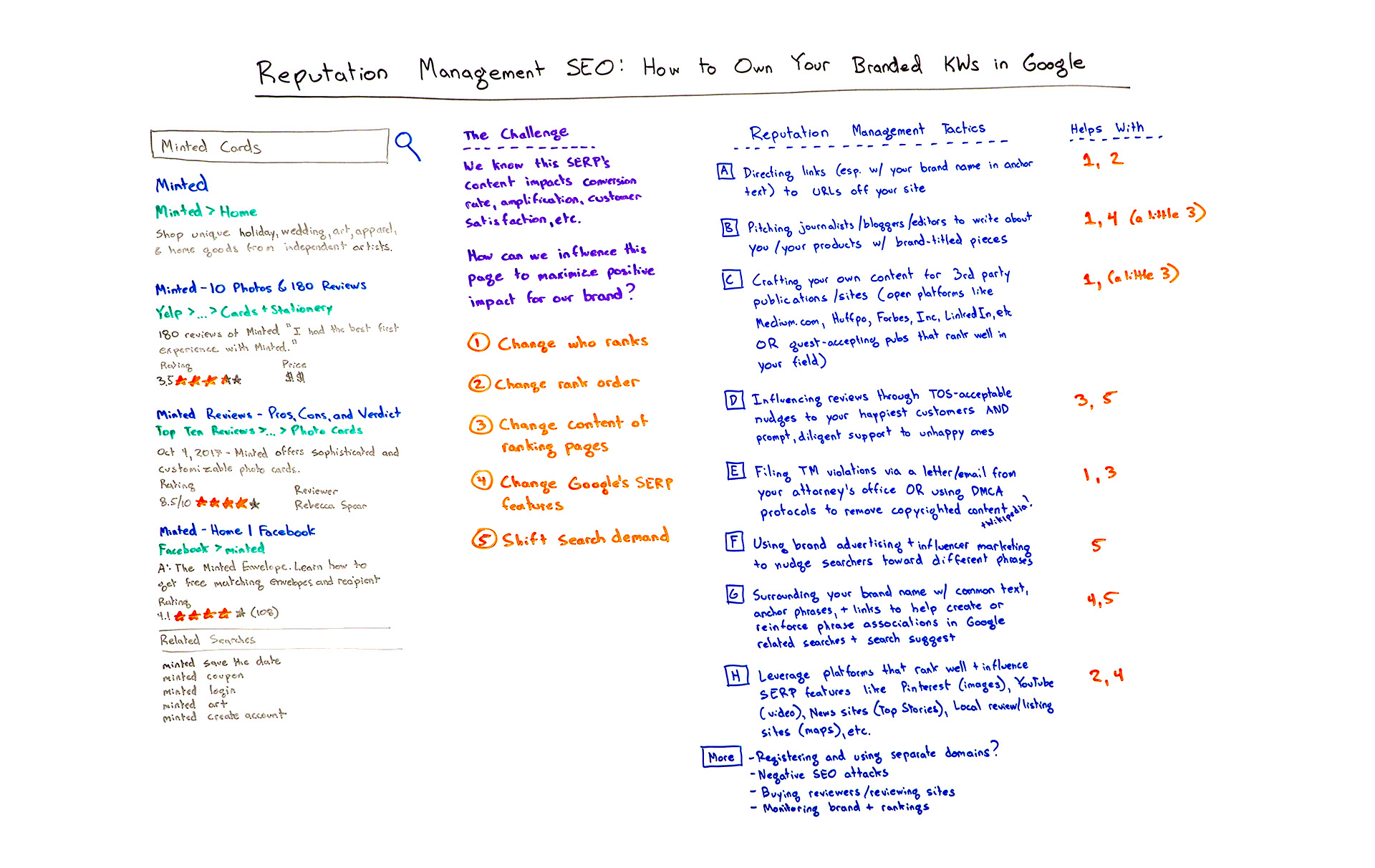
A searcher's first experience with your brand happens on Google's SERPs — not your website. Having the ability to influence their organic first impression can go a long way toward improving both customer perception of your brand and conversion rates. In today's Whiteboard Friday, Rand takes us through the inherent challenges of reputation management SEO and tactics for doing it effectively.

Reputation management SEO: How to Own Your Branded Keywords in Google

Click on the whiteboard image above to open a high-resolution version in a new tab!

Video Transcription

Howdy, Moz fans, and welcome to another edition of Whiteboard Friday. This week we are chatting about reputation management SEO.

So it turns out I've been having a number of conversations with many of you in the Moz community and many friends of mine in the startup and entrepreneurship worlds about this problem that happens pretty consistently, which is essentially that folks who are searching for your brand in Google experience their first touch before they ever get to your site, their first experience with your brand is through Google's search result page. This SERP, controlling what appears here, what it says, how it says it, who is ranking, where they're ranking, all of those kinds of things, can have a strong input on a bunch of things.

The challenge

We know that the search results' content can impact...
  • Your conversion rate. People see that the reviews are generally poor or the wording is confusing or it creates questions in their mind that your content doesn't answer. That can hurt your conversion rate.
  • It can hurt amplification. People who see you in here, who think that there is something bad or negative about you, might be less likely to link to you or share or talk about you.
  • It can impact customer satisfaction. Customers who are going to buy from you but see something negative in the search results might be more likely to complain about it. Or if they see that you have a lower review or ranking or whatnot, they may be more likely to contribute a negative one than if they had seen that you had stellar ones. Their expectations are being biased by what's in these search results. A lot of times it is totally unfair.

So many of the conversations I've been having, for example with folks in the startup space, are like, "Hey, people are reviewing my product. We barely exist yet. We don't have these people as customers. We feel like maybe we're getting astroturfed by competitors, or someone is just jumping in here and trying to profit off the fact that we have a bunch of brand search now." So pretty frustrating.

How can we influence this page to maximize positive impact for our brand?

There are, however, some ways to address it. In order to change these results, make them better, Minted, for example, of which I should mention I used to be on Minted's Board of Directors, and so I believe my wife and I still have some stock in that company. So full disclosure there. But Minted, they're selling holiday cards. The holiday card market is about to heat up before November and December here in the United States, which is the Christmas holiday season, and that's when they sell a lot of these cards. So we can do a few things.

I. Change who ranks. So potentially remove some and add some new ones in here, give Google some different options. We could change the ranking order. So we could say, "Hey, we prefer this be lower down and this other one be higher up." We can change that through SEO.

II. Change the content of the ranking pages. If you have poor reviews or if someone has written about you in a particular way and you wish to change that, there are ways to influence that as well.

III. Change the SERP features. So we may be able to get images, for example, of Minted's cards up top, which would maybe make people more likely to purchase them, especially if they're exceptionally beautiful.

IV. Add in top stories. If Minted has some great press about them, we could try and nudge Google to use stuff from Google News in here. Maybe we could change what's in related searches, those types of things.

V. Shift search demand. So if it's the case that you're finding that people start typing "Minted" and then maybe are search suggested "Minted versus competitor X" or "Minted card problems" or whatever it is, I don't think either of those are actually in the suggest, but there are plenty of companies who do have that issue. When that's the case, you can also shift the search demand.

Reputation management tactics

Here are a number of tactics that I actually worked on with the help of Moz's Head of SEO, Britney Muller. Britney and I came up with a bunch of tactics, so many that they won't entirely fit on here, but we can describe a few more for you in the comments.

A. Directing link to URLs off your site (Helps with 1 & 2). First off, links are still a big influencer of a lot of the content that you see here. So it is the case that because Yelp is a powerful domain and they have lots of links, potentially even have lots of links to this page about Minted, it's the case that changing up those links, redirecting some of them, adding new links to places, linking out from your own site, linking from articles you contribute to, linking from, for example, the CEO's bio or a prominent influencer on the team's bio when they go and speak at events or contribute to sources, or when Minted makes donations, or when they support public causes, or when they're written about in the press, changing those links and where they point to can have a positive impact.

One of the problems that we see is that a lot of brands think, "All my links about my brand should always go to my homepage." That's not actually the case. It could be the case that you actually want to find, hey, maybe we would like our Facebook page to rank higher. Or hey, we wrote a great piece on Medium about our engineering practices or our diversity practices or how we give back to our community. Let's see if we can point some of our links to that.

B. Pitching journalists or bloggers or editors or content creators on the web (Helps with 1, 4, a little 3), of any kind, to write about you and your products with brand titled pieces. This is on e of the biggest elements that gets missing. For example, a journalist for the San Francisco Chronicle might write a piece about Minted and say something like, "At this startup, it's not unusual to find blah, blah, blah." What you want to do is go, "Come on, man, just put the word 'Minted' in the title of the piece." If they do, you've got a much better shot of having that piece potentially rank in here. So that's something that whoever you're working with on that content creation side, and maybe a reporter at the Chronicle would be much more difficult to do this, but a blogger who's writing about you or a reviewer, someone who's friendly to you, that type of a pitch would be much more likely to have some opportunity in there. It can get into the top stories SERP feature as well.

C. Crafting your own content (Helps with 1, a little 3). If they're not going to do it for you, you can craft your own content. You can do this in two kinds of ways. One is for open platforms like Medium.com or Huffington Post or Forbes or Inc. or LinkedIn, these places that accept those, or guest accepting publications that are much pickier, that are much more rarely taking input, but that rank well in your field. You don't have to think about this exclusively from a link building perspective. In fact, you don't care if the links are nofollow. You don't care if they give you no links at all. What you're trying to do is get your name, your title, your keywords into the title element of the post that's being put up.

D. You can influence reviews (Helps with 3 & 5). Depending on the site, it's different from site to site. So I'm putting TOS acceptable, terms of service acceptable nudges to your happy customers and prompt diligent support to the unhappy ones. So Yelp, for example, says, "Don't solicit directly reviews, but you are allowed to say, 'Our business is featured on Yelp.'" For someone like Minted, Yelp is mostly physical places, and while Minted technically has a location in San Francisco, their offices, it's kind of odd that this is what's ranking here. In fact, I wouldn't expect this to be. I think this is a strange result to have for an online-focused company, to have their physical location in there. So certainly by nudging folks who are using Minted to rather than contribute to their Facebook reviews or their Google reviews to actually say, "Hey, we're also on Yelp. If you've been happy with us, you can check us out there." Not go leave us a review there, but we have a presence.

E. Filing trademark violations (Helps with 1 & 3). So this is a legal path and legal angle, but it works in a couple of different ways. You can do a letter or an email from your attorney's office, and oftentimes that will shut things down. In fact, brief story, a friend of mine, who has a company, found that their product was featured on Amazon's website. They don't sell on Amazon. No one is reselling on Amazon. In fact, the product mostly hasn't even shipped yet. When they looked at the reviews, because they haven't sold very many of their product, it's an expensive product, none of the people who had left reviews were actually their customers. So they went, "What is going on here?" Well, it turns out Amazon, in order to list your product, needs your trademark permission. So they can send an attorney's note to Amazon saying, "Hey, you are using our product, our trademark, our brand name, our visuals, our photos without permission. You need to take that down."

The other way you can go about this is the Digital Millennium Copyright Act (DMCA) protocols. You can do this directly through Google, where you file and say basically, "Hey, they've taken copyrighted content from us and they're using it on their website, and that's illegal." Google will actually remove them from the search results.
This is not necessarily a legal angle, but I bet you didn't know this. A few years ago I had an article on Wikipedia about me, Rand Fishkin. There was like a Wikipedia piece. I don't like that. Wikipedia, it's uncontrollable. Because I'm in the SEO world, I don't have a very good relationship with Wikipedia's editors. So I actually lobbied them, on the talk page of the article about me, to have it removed. There are a number of conditions that Wikipedia has where a page can be removed. I believe I got mine removed under the not notable enough category, which I think probably still applies. That was very successful. So wonderfully, now, Wikipedia doesn't rank for my name anymore, which means I can control the SERPs much more easily. So a potential there too.

F. Using brand advertising and/or influencer marketing to nudge searchers towards different phrases (Helps with 5). So what you call your products, how you market yourself is often how people will search for you. If Minted wanted to change this from Minted cards to minted photo cards, and they really like the results from minted photo cards and those had better conversion rates, they could start branding that through their advertising and their influencer marketing.

G. Surrounding your brand name, a similar way, with common text, anchor phrases, and links to help create or reinforce an association that Google builds around language (Helps with 4 & 5). In that example I said before, having Minted plus a link to their photo cards page or Minted photo cards appearing on the web, not only their own website but everywhere else out there more commonly than Minted cards will bias related searches and search suggest. We've tested this. You can actually use anchor text and surrounding text to sort of bias, in addition to how people search, how Google shows it.

H. Leverage some platforms that rank well and influence SERP features (Helps with 2 & 4). So rather than just trying to get into the normal organic results, we might say, "Hey, I want some images here. Aha, Pinterest is doing phenomenal work at image SEO. If I put up a bunch of pictures from Minted, of Minted's cards or photo cards on Pinterest, I have a much better shot at ranking in and triggering the image results." You can do the same thing with YouTube for videos. You can do the same thing with new sites and for what's called the top stories feature. The same thing with local and local review sites for the maps and local results feature. So all kinds of ways to do that.

More...

Four final topics before we wrap up.

  • Registering and using separate domains? Should I register and use a separate domain, like MintedCardReviews, that's owned by Minted? Generally not. It's not impossible to do reputation management SEO through that, but it can be difficult. I'm not saying you might not want to give it a spin now and then, but generally that's sort of like creating your own reviews, your own site. Google often recognizes those and looks behind the domain registration wall, and potentially you have very little opportunity to rank for those, plus you're doing a ton of link building and that kind of stuff. Better to leverage someone's platform, who can already rank, usually.
  • Negative SEO attacks. You might remember the story from a couple weeks ago, in Fast Company, where Casper, the mattress brand, was basically accused of and found mostly to be generally guilty of going after and buying negative links to a review site that was giving them poor reviews, giving their mattresses poor reviews, and to minimal effect. I think, especially nowadays, this is much less effective than it was a few years ago following Google's last Penguin update. But certainly I would not recommend it. If you get found out for it, you can be sued too.
  • What about buying reviewers and review sites? This is what Casper ended up doing. So that site they were buying negative links against, they ended up just making an offer and buying out the person who owned it. Certainly it is a way to go. I don't know if it's the most ethical or honest thing to do, but it is a possibility.
  • Monitoring brand and rankings. Finally, I would urge you to, if you're not experiencing these today, but you're worried about them, definitely monitor your brand. You could use something like a Fresh Web Explorer or Mention.com or Talkwalker. And your rankings too. You want to be tracking your rankings so that you can see who's popping in there and who's not. Obviously, there are lots of SEO tools to do that.
All right, everyone, thanks for joining us, and we'll see again next week for another edition of Whiteboard Friday. Take care.

Video transcription by Speechpad.com


Sign up for The Moz Top 10, a semimonthly mailer updating you on the top ten hottest pieces of SEO news, tips, and rad links uncovered by the Moz team. Think of it as your exclusive digest of stuff you don't have time to hunt down but want to read!

Reverse Phone - People Search - Email Search - Public Records - Criminal Records. Best Data, Conversions, And Customer Suppor

Thursday, July 12, 2018

Fight gaming fraud with AI and machine learning (VB Live)

Something every woman should know - WHY MEN LIE!


VB LIVE: Fraud tanks your game’s reputation and directly impacts your bottom line. It’s also been notoriously difficult to combat – until now. Learn about how artificial intelligence can keep your game and players safe from increasingly aggressive online criminals, when you join this VB Live event! Don’t miss out! Registration is…Read More

Reverse Phone - People Search - Email Search - Public Records - Criminal Records. Best Data, Conversions, And Customer Suppor

Wednesday, July 4, 2018

Albert Technologies raises $18 million for AI platform that automates marketing campaigns

Something every woman should know - WHY MEN LIE!

Albert
In case you missed the memo, artificial intelligence (AI) is now encroaching into just about every facet of our lives, from recruitment and cybersecurity to ecommerce and even reputation management. But creativity is one of the last remaining vestiges of human endeavor that is safe from the bony claws of algorithmic automation… for how long,…Read More

Reverse Phone - People Search - Email Search - Public Records - Criminal Records. Best Data, Conversions, And Customer Suppor