Sunday, July 22, 2018

Coinbase’s big week

Something every woman should know - WHY MEN LIE!


GUEST: Coinbase has earned a reputation for itself as the most trusted cryptocurrency exchange in the U.S. And last week the six-year-old San Francisco-based company made key strides towards mainstreaming cryptocurrency use. The company announced early in the week that it has been given the go ahead to purchase Keystone Capital Corp., Venovate Mark…Read More

Reverse Phone - People Search - Email Search - Public Records - Criminal Records. Best Data, Conversions, And Customer Suppor

Friday, July 20, 2018

Reputation Management SEO: How to Own Your Branded Keywords in Google - Whiteboard Friday

Something every woman should know - WHY MEN LIE!

Posted by randfish

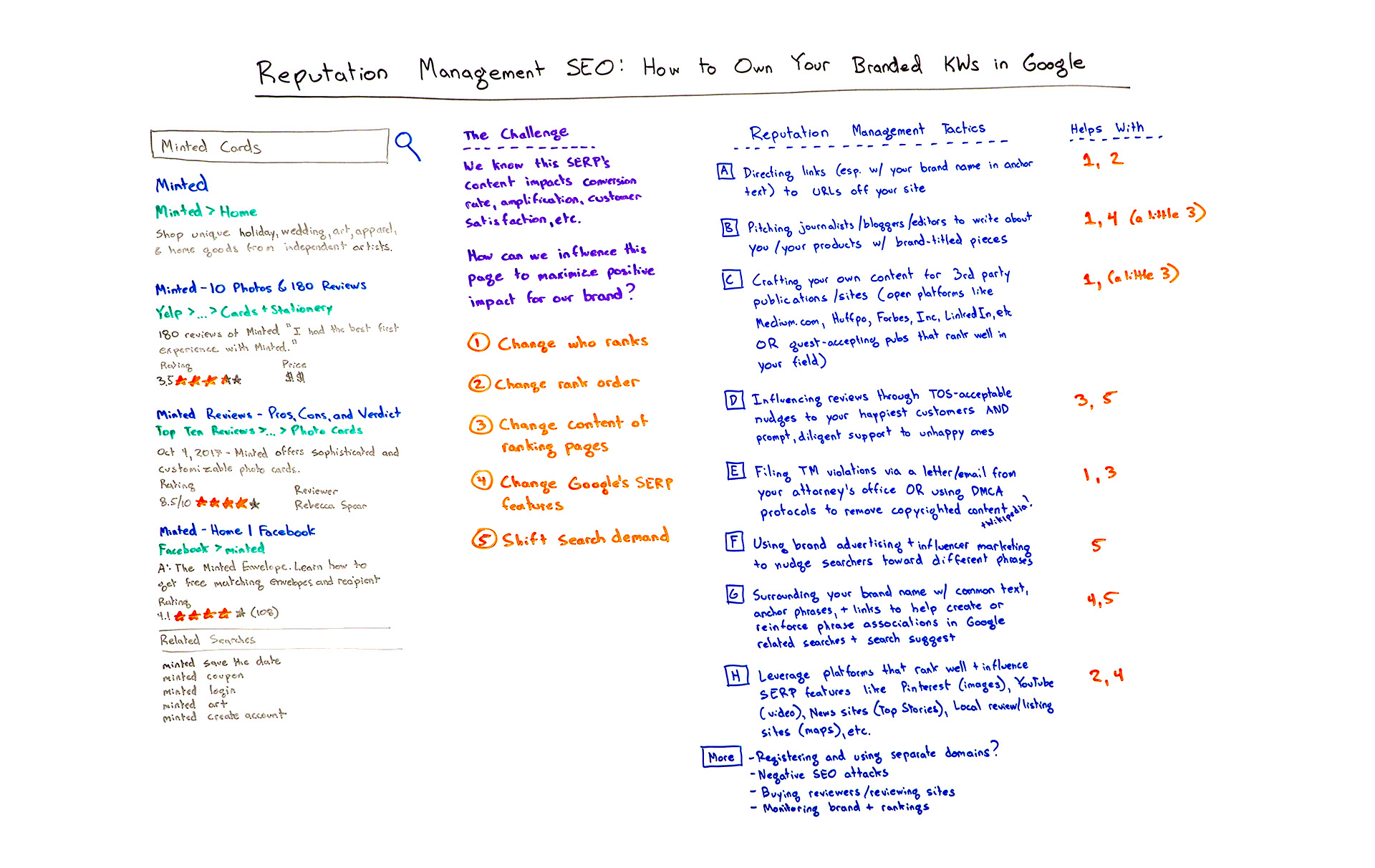
A searcher's first experience with your brand happens on Google's SERPs — not your website. Having the ability to influence their organic first impression can go a long way toward improving both customer perception of your brand and conversion rates. In today's Whiteboard Friday, Rand takes us through the inherent challenges of reputation management SEO and tactics for doing it effectively.

Reputation management SEO: How to Own Your Branded Keywords in Google

Click on the whiteboard image above to open a high-resolution version in a new tab!

Video Transcription

Howdy, Moz fans, and welcome to another edition of Whiteboard Friday. This week we are chatting about reputation management SEO.

So it turns out I've been having a number of conversations with many of you in the Moz community and many friends of mine in the startup and entrepreneurship worlds about this problem that happens pretty consistently, which is essentially that folks who are searching for your brand in Google experience their first touch before they ever get to your site, their first experience with your brand is through Google's search result page. This SERP, controlling what appears here, what it says, how it says it, who is ranking, where they're ranking, all of those kinds of things, can have a strong input on a bunch of things.

The challenge

We know that the search results' content can impact...
  • Your conversion rate. People see that the reviews are generally poor or the wording is confusing or it creates questions in their mind that your content doesn't answer. That can hurt your conversion rate.
  • It can hurt amplification. People who see you in here, who think that there is something bad or negative about you, might be less likely to link to you or share or talk about you.
  • It can impact customer satisfaction. Customers who are going to buy from you but see something negative in the search results might be more likely to complain about it. Or if they see that you have a lower review or ranking or whatnot, they may be more likely to contribute a negative one than if they had seen that you had stellar ones. Their expectations are being biased by what's in these search results. A lot of times it is totally unfair.

So many of the conversations I've been having, for example with folks in the startup space, are like, "Hey, people are reviewing my product. We barely exist yet. We don't have these people as customers. We feel like maybe we're getting astroturfed by competitors, or someone is just jumping in here and trying to profit off the fact that we have a bunch of brand search now." So pretty frustrating.

How can we influence this page to maximize positive impact for our brand?

There are, however, some ways to address it. In order to change these results, make them better, Minted, for example, of which I should mention I used to be on Minted's Board of Directors, and so I believe my wife and I still have some stock in that company. So full disclosure there. But Minted, they're selling holiday cards. The holiday card market is about to heat up before November and December here in the United States, which is the Christmas holiday season, and that's when they sell a lot of these cards. So we can do a few things.

I. Change who ranks. So potentially remove some and add some new ones in here, give Google some different options. We could change the ranking order. So we could say, "Hey, we prefer this be lower down and this other one be higher up." We can change that through SEO.

II. Change the content of the ranking pages. If you have poor reviews or if someone has written about you in a particular way and you wish to change that, there are ways to influence that as well.

III. Change the SERP features. So we may be able to get images, for example, of Minted's cards up top, which would maybe make people more likely to purchase them, especially if they're exceptionally beautiful.

IV. Add in top stories. If Minted has some great press about them, we could try and nudge Google to use stuff from Google News in here. Maybe we could change what's in related searches, those types of things.

V. Shift search demand. So if it's the case that you're finding that people start typing "Minted" and then maybe are search suggested "Minted versus competitor X" or "Minted card problems" or whatever it is, I don't think either of those are actually in the suggest, but there are plenty of companies who do have that issue. When that's the case, you can also shift the search demand.

Reputation management tactics

Here are a number of tactics that I actually worked on with the help of Moz's Head of SEO, Britney Muller. Britney and I came up with a bunch of tactics, so many that they won't entirely fit on here, but we can describe a few more for you in the comments.

A. Directing link to URLs off your site (Helps with 1 & 2). First off, links are still a big influencer of a lot of the content that you see here. So it is the case that because Yelp is a powerful domain and they have lots of links, potentially even have lots of links to this page about Minted, it's the case that changing up those links, redirecting some of them, adding new links to places, linking out from your own site, linking from articles you contribute to, linking from, for example, the CEO's bio or a prominent influencer on the team's bio when they go and speak at events or contribute to sources, or when Minted makes donations, or when they support public causes, or when they're written about in the press, changing those links and where they point to can have a positive impact.

One of the problems that we see is that a lot of brands think, "All my links about my brand should always go to my homepage." That's not actually the case. It could be the case that you actually want to find, hey, maybe we would like our Facebook page to rank higher. Or hey, we wrote a great piece on Medium about our engineering practices or our diversity practices or how we give back to our community. Let's see if we can point some of our links to that.

B. Pitching journalists or bloggers or editors or content creators on the web (Helps with 1, 4, a little 3), of any kind, to write about you and your products with brand titled pieces. This is on e of the biggest elements that gets missing. For example, a journalist for the San Francisco Chronicle might write a piece about Minted and say something like, "At this startup, it's not unusual to find blah, blah, blah." What you want to do is go, "Come on, man, just put the word 'Minted' in the title of the piece." If they do, you've got a much better shot of having that piece potentially rank in here. So that's something that whoever you're working with on that content creation side, and maybe a reporter at the Chronicle would be much more difficult to do this, but a blogger who's writing about you or a reviewer, someone who's friendly to you, that type of a pitch would be much more likely to have some opportunity in there. It can get into the top stories SERP feature as well.

C. Crafting your own content (Helps with 1, a little 3). If they're not going to do it for you, you can craft your own content. You can do this in two kinds of ways. One is for open platforms like Medium.com or Huffington Post or Forbes or Inc. or LinkedIn, these places that accept those, or guest accepting publications that are much pickier, that are much more rarely taking input, but that rank well in your field. You don't have to think about this exclusively from a link building perspective. In fact, you don't care if the links are nofollow. You don't care if they give you no links at all. What you're trying to do is get your name, your title, your keywords into the title element of the post that's being put up.

D. You can influence reviews (Helps with 3 & 5). Depending on the site, it's different from site to site. So I'm putting TOS acceptable, terms of service acceptable nudges to your happy customers and prompt diligent support to the unhappy ones. So Yelp, for example, says, "Don't solicit directly reviews, but you are allowed to say, 'Our business is featured on Yelp.'" For someone like Minted, Yelp is mostly physical places, and while Minted technically has a location in San Francisco, their offices, it's kind of odd that this is what's ranking here. In fact, I wouldn't expect this to be. I think this is a strange result to have for an online-focused company, to have their physical location in there. So certainly by nudging folks who are using Minted to rather than contribute to their Facebook reviews or their Google reviews to actually say, "Hey, we're also on Yelp. If you've been happy with us, you can check us out there." Not go leave us a review there, but we have a presence.

E. Filing trademark violations (Helps with 1 & 3). So this is a legal path and legal angle, but it works in a couple of different ways. You can do a letter or an email from your attorney's office, and oftentimes that will shut things down. In fact, brief story, a friend of mine, who has a company, found that their product was featured on Amazon's website. They don't sell on Amazon. No one is reselling on Amazon. In fact, the product mostly hasn't even shipped yet. When they looked at the reviews, because they haven't sold very many of their product, it's an expensive product, none of the people who had left reviews were actually their customers. So they went, "What is going on here?" Well, it turns out Amazon, in order to list your product, needs your trademark permission. So they can send an attorney's note to Amazon saying, "Hey, you are using our product, our trademark, our brand name, our visuals, our photos without permission. You need to take that down."

The other way you can go about this is the Digital Millennium Copyright Act (DMCA) protocols. You can do this directly through Google, where you file and say basically, "Hey, they've taken copyrighted content from us and they're using it on their website, and that's illegal." Google will actually remove them from the search results.
This is not necessarily a legal angle, but I bet you didn't know this. A few years ago I had an article on Wikipedia about me, Rand Fishkin. There was like a Wikipedia piece. I don't like that. Wikipedia, it's uncontrollable. Because I'm in the SEO world, I don't have a very good relationship with Wikipedia's editors. So I actually lobbied them, on the talk page of the article about me, to have it removed. There are a number of conditions that Wikipedia has where a page can be removed. I believe I got mine removed under the not notable enough category, which I think probably still applies. That was very successful. So wonderfully, now, Wikipedia doesn't rank for my name anymore, which means I can control the SERPs much more easily. So a potential there too.

F. Using brand advertising and/or influencer marketing to nudge searchers towards different phrases (Helps with 5). So what you call your products, how you market yourself is often how people will search for you. If Minted wanted to change this from Minted cards to minted photo cards, and they really like the results from minted photo cards and those had better conversion rates, they could start branding that through their advertising and their influencer marketing.

G. Surrounding your brand name, a similar way, with common text, anchor phrases, and links to help create or reinforce an association that Google builds around language (Helps with 4 & 5). In that example I said before, having Minted plus a link to their photo cards page or Minted photo cards appearing on the web, not only their own website but everywhere else out there more commonly than Minted cards will bias related searches and search suggest. We've tested this. You can actually use anchor text and surrounding text to sort of bias, in addition to how people search, how Google shows it.

H. Leverage some platforms that rank well and influence SERP features (Helps with 2 & 4). So rather than just trying to get into the normal organic results, we might say, "Hey, I want some images here. Aha, Pinterest is doing phenomenal work at image SEO. If I put up a bunch of pictures from Minted, of Minted's cards or photo cards on Pinterest, I have a much better shot at ranking in and triggering the image results." You can do the same thing with YouTube for videos. You can do the same thing with new sites and for what's called the top stories feature. The same thing with local and local review sites for the maps and local results feature. So all kinds of ways to do that.

More...

Four final topics before we wrap up.

  • Registering and using separate domains? Should I register and use a separate domain, like MintedCardReviews, that's owned by Minted? Generally not. It's not impossible to do reputation management SEO through that, but it can be difficult. I'm not saying you might not want to give it a spin now and then, but generally that's sort of like creating your own reviews, your own site. Google often recognizes those and looks behind the domain registration wall, and potentially you have very little opportunity to rank for those, plus you're doing a ton of link building and that kind of stuff. Better to leverage someone's platform, who can already rank, usually.
  • Negative SEO attacks. You might remember the story from a couple weeks ago, in Fast Company, where Casper, the mattress brand, was basically accused of and found mostly to be generally guilty of going after and buying negative links to a review site that was giving them poor reviews, giving their mattresses poor reviews, and to minimal effect. I think, especially nowadays, this is much less effective than it was a few years ago following Google's last Penguin update. But certainly I would not recommend it. If you get found out for it, you can be sued too.
  • What about buying reviewers and review sites? This is what Casper ended up doing. So that site they were buying negative links against, they ended up just making an offer and buying out the person who owned it. Certainly it is a way to go. I don't know if it's the most ethical or honest thing to do, but it is a possibility.
  • Monitoring brand and rankings. Finally, I would urge you to, if you're not experiencing these today, but you're worried about them, definitely monitor your brand. You could use something like a Fresh Web Explorer or Mention.com or Talkwalker. And your rankings too. You want to be tracking your rankings so that you can see who's popping in there and who's not. Obviously, there are lots of SEO tools to do that.
All right, everyone, thanks for joining us, and we'll see again next week for another edition of Whiteboard Friday. Take care.

Video transcription by Speechpad.com


Sign up for The Moz Top 10, a semimonthly mailer updating you on the top ten hottest pieces of SEO news, tips, and rad links uncovered by the Moz team. Think of it as your exclusive digest of stuff you don't have time to hunt down but want to read!

Reverse Phone - People Search - Email Search - Public Records - Criminal Records. Best Data, Conversions, And Customer Suppor

Thursday, July 12, 2018

Fight gaming fraud with AI and machine learning (VB Live)

Something every woman should know - WHY MEN LIE!


VB LIVE: Fraud tanks your game’s reputation and directly impacts your bottom line. It’s also been notoriously difficult to combat – until now. Learn about how artificial intelligence can keep your game and players safe from increasingly aggressive online criminals, when you join this VB Live event! Don’t miss out! Registration is…Read More

Reverse Phone - People Search - Email Search - Public Records - Criminal Records. Best Data, Conversions, And Customer Suppor

Wednesday, July 4, 2018

Albert Technologies raises $18 million for AI platform that automates marketing campaigns

Something every woman should know - WHY MEN LIE!

Albert
In case you missed the memo, artificial intelligence (AI) is now encroaching into just about every facet of our lives, from recruitment and cybersecurity to ecommerce and even reputation management. But creativity is one of the last remaining vestiges of human endeavor that is safe from the bony claws of algorithmic automation… for how long,…Read More

Reverse Phone - People Search - Email Search - Public Records - Criminal Records. Best Data, Conversions, And Customer Suppor
Tuesday, July 3, 2018

How to Optimize Car Dealership Websites

Something every woman should know - WHY MEN LIE!

Posted by sherrybonelli

Getting any local business to rank high on Google is becoming more and more difficult, but one of the most competitive — and complex — industries for local SEO are car dealerships. Today’s car shoppers do much of their research online before they even step into a dealership showroom. (And many people don’t even know what type of car they even want when they begin their search.)

According to Google, the average car shopper only visits two dealerships when they’re searching for a new vehicle. That means it’s even more important than ever for car dealerships to show up high in local search results.

However, car dealerships are more complex than the average local business — which means their digital marketing strategies are more complex, as well. First, dealers often sell new vehicles from several different manufacturers with a variety of makes and models. Next, because so many people trade in their old cars when they purchase new cars, car dealers also sell a variety of used vehicles from even more manufacturers. Additionally, car dealerships also have a service department that offers car maintenance and repairs — like manufacturer warranty work, oil changes, tire rotations, recall repairs, and more. (The search feature on a car dealer’s website alone is a complex system!)

Essentially, a car dealer is like three businesses in one: they sell new cars, used cars, AND do vehicle repairs. This means your optimization strategy must also be multi-faceted, too.

Also, if you look at the car dealerships in your city, you will probably find at least one dealership with multiple locations. These multi-location family of dealerships may be in the same city or in surrounding cities.

Additionally, depending on that family of dealerships, they may have one website or they might have different websites for each location. (Many auto manufacturers require dealers to have separate websites if they sell certain competitors’ vehicles.)

So if you’re helping car dealers with SEO, you must be thinking about the various manufacturers, the types of vehicles being sold (new and used), the repair services being offered, the number of websites and locations you’ll be managing, manufacturer requirements — among other things.

So what are some of the search optimization strategies you should use when working with a car dealership? Here are some SEO recommendations.

Google My Business

Google My Business has been shown to have a direct correlation to local SEO — especially when it comes to showing up in the Google Local 3-Pack.

One important factor with Google My Business is making sure that the dealership’s information is correct and contains valuable information that searchers will find helpful. This is important for competitive markets — especially when only a handful of sites show up on the first page of Google search results. Here are some key Google My Business features to take advantage of:

Name, address, and phone number

Ensure that the dealership’s name, address and phone number is correct. (If you have a toll-free number, make sure that your LOCAL area code phone number is the one listed on your Google My Business listing.) It’s important that this information is the same on all local online directories that the dealership is listed on.

Categories

Google My Business allows you to select categories (a primary category and additional categories) to describe what your dealership offers. Even though the categories you select affect local rankings, keep in mind that the categories are just one of many factors that determine how you rank in search results.

  • These categories help connect you with potential customers that are searching for what your car dealership sells. You can select a primary category and additional categories – but don’t go overboard by selecting too many categories. Be specific. Choose as few categories as possible to describe the core part of your dealership’s business.
  • If the category you want to use isn’t available, choose a general category that’s still accurate. You can’t create your own categories. Here are some example categories you could use:
    • Car Dealer
    • Used Car Dealer
    • BMW dealer
  • Keep in mind that if you’re not ranking as high as you want to rank, changing your categories may improve your rankings. You might need to tweak your categories until you get it right. If you add or edit one of your categories, you might be asked by Google to verify your business again. (This just helps Google confirm that your business information is accurate.)

Photos

Google uses photo engagement on Google My Business to help rank businesses in local search. Show photos of the new and used cars you have on your dealership’s lot — and be sure to update them frequently. After you make a sale, make sure you get a photo consent form signed and ask if you can take a picture of your happy customers with their new car to upload to Google My Business (and your other social media platforms.)

If you’re a digital marketing agency or a sales manager at a dealership, getting your salespeople to upload photos to Google My Business can be challenging. Steady Demand’s LocalPics tool makes it easy for salespeople to send pictures of happy customers in their new cars by automatically sending text message reminders. You simply set the frequency of these reminders. The LocalPics tool automatically sends text messages to the sales reps reminding them to submit their photos:

All the sales reps have to do is save their customers’ photos to their phone. You set up text message reminders to each sales rep and when they get the text message reminder, the sales team simply has to go into their smartphone’s pictures and upload their images through the text message, and the photos are automatically posted to the dealership’s Google My Business listing! (They can also text photos to their Google My Business anytime they want as well — they don’t have to wait for the reminder text messages.)

Videos

Google recently began allowing businesses to upload 30-second videos to their Google My Business listing. Videos are a great way to show off the uniqueness of your dealership. These videos auto-play on mobile devices — which is where many people do their car searching on — so you should include several videos to showcase the cars and what’s going on at your dealership.

Reviews

Online reviews are crucial for when people search for the right type of car AND the dealership they should purchase that car from. Make sure you ask happy customers to leave reviews on your Google My Business listing and ensure that you keep up by responding to all reviews left on your Google My Business listing.

Questions & Answers

The Google My Business Q&A feature has been around for several months, yet many businesses still don’t know about it — or pay attention to it. It’s important that you are constantly looking at questions that are being asked of your dealership and that you promptly answer those questions with the correct answer.

Just like most things on Google My Business, anyone can answer questions that are asked — and that means that it’s easy for misinformation to get out about your dealership and the cars on your lot. Make sure you have a person dedicated on your team to watch the Q&As being asked on your listing.

Also, be sure to frequently check your GMB dashboard. Remember, virtually anyone can make changes to your Google My Business listing. You want to check to make sure nobody has changed your information without you knowing.

Online directories (especially car directories)

If you’re looking for ways to improve your dealership’s rankings and backlink profile, online automotive directories are a great place to start. Submitting your dealership’s site to an online automotive directory or to an online directory that has an automotive category can help build your backlink profile. Additionally, many of these online directories show up on the first page of Google search results, so if your dealership isn’t listed on them, you’re missing out.

There are quite a few paid-for and free automotive online directories. Yelp, YellowPages, Bing, etc. are some of the larger general online directories that have dedicated automotive categories you can get listed on for free. Make sure your dealership’s name, address, and phone number (NAP) are consistent with the information that you have listed on Google My Business.

Online reviews

Online reviews are important. If your dealership has bad reviews, people are less likely to trust you. There are dedicated review sites for vehicle reviews and car dealership reviews. Sites like Kelley Blue Book, DealerRater, Cars.com, and Edmunds are just a few sites that make it easy for consumers to check out dealership reviews. DealerRater even allows consumers to list — and review — the employees they worked with at a particular dealership:

If they have a negative experience with your dealership — or one of your employees — you can bet that unhappy customer will leave a review. (And remember that reviews are not only left about your new and used car sales — they are also left about your repair shop as well!)

There are software platforms you can install on your dealership’s site that make it easier for customers to leave reviews for your dealership. These tools also make it simple to monitor and deflect negative reviews to certain review websites. (It’s important to note that Google recently changed their policies and no longer support “review gating” — software that doesn’t allow a negative review to be posted on Google My Business.)

NOTE: Many automotive manufacturers offer dealerships coop dollars that can be used for advertising and promotions; however, sometimes they make it easier for the dealers to get that money if they use specific turnkey programs from manufacturer-approved vendors. As an example, if you offer a reputation marketing software tool that can help the dealership get online reviews, the dealership may be incentivized to use DealerRater instead because they’ve been “approved” by the manufacturer. (And this goes for other marketing and advertising as well — not just reputation marketing.)

Select long-tail keywords

Selecting the right keywords has always been a part of SEO. You want to select the keywords that have a high search frequency, mid-to-low competitiveness, ones that have direct relevance to your website’s content — and are keyword phrases that your potential car buyers are actually using to search for the cars and services your dealership offers.

When it comes to selecting keywords for your site’s pages, writing for long-tailed keywords (e.g. “2018 Ford Mustang GT features”) have a better chance of ranking highly in Google search results than a short-tailed and generic keyword phrase like “Ford cars.”

Other car-related search keywords — like “MSRP” and “list prices” — are keywords you should add to your arsenal.

Optimize images

According to Google, searches for "pictures of [automotive brand]" is up 37% year-over-year. This means when you’re uploading various pictures of the cars for sale on your car lot, be sure to include the words “pictures of” and the brand name, make, and model where appropriate.

For instance, if you’re showing the interior of the 2018 Dodge Challenger, you may want to name the actual picture image file “picture-of-dodge-challenger-2018-awd-front-seat-interior.png” and use the alt tag “Pictures of Dodge Challenger 2018 AWD Front Seat Interior for Sale in Cedar Rapids.”

As with everything SEO-related, use discretion with the “pictures of” strategy. Don’t overdo it, but it should be a part of your image optimization strategy to a certain extent on specific car overview pages.

Optimize for local connections

One thing many car dealerships fail to realize is how important it is to make local connections — not only for local SEO purposes but also for community trust and support as well. You should make a connection on at least one of the pages on your site that relates to what’s going on in your local community/city.

For instance, on your About Us page, you may want to include a link to a city-specific page that talks about what’s going on in your city. Is there a July 4th parade? And if so, are you having a float or donating a convertible for the town’s mayor to ride in? If you sponsor a local charity or belong to the Chamber of Commerce, it’d be great to mention it on one of these localized pages (mentioning your city’s name, of course) and talk about what your dealership’s role is and what you do. Is there an upcoming charity walk or do you donate to your local animal shelter? Share pictures (and be sure to use alt tags) and write about what you’re doing to help.

All of this information not only helps beef up your local SEO because you’re using the city’s name you’re trying to rank for, but it also creates good will for future customers. Additionally, you can create links to these various charities and organizations and ask that they, in turn, create a link to your site. Local backlinking at its best!

Schema

If you want to increase the chances of Google — and the other search engines — understanding what your site’s pages are about, using schema markup will give you a leg-up over your competition. (And chances are your car dealership competitors aren’t yet using schema markup.)

You’ll want to start by using the Vehicle “Type” schema and then markup each particular car using the Auto schema markup JSON-LD code. You can find the Schema.org guidelines for using Schema Markup for Cars on Schema.org. Below is an example of what JSON-LD schema markup looks like for a 2009 Volkswagen Golf:

Listen to the SEO for Car Dealerships podcast episode to learn EVEN MORE!

If you want to learn even more information about the complexities of car dealerships and search optimization strategies, be sure to listen to my interview on MozPod’s SEO for Car Dealerships.

In this podcast we’ll cover even more topics like:

  • What NOT to include in your page’s title tag
  • How to determine if you really own your dealership’s website or not
  • How to handle it if your dealership moves locations
  • Why using the manufacturer-provided car description information verbatim is a bad idea
  • Does “family owned” really matter?
  • How to handle car dealers with multiple locations
  • How to get creative with your Car Service pages by showing off your employees
  • Why blogging is a must-do SEO strategy and some topic ideas to get you started
  • Ways to get local backlinks
  • Tips for getting online reviews
  • What other digital marketing strategies you should try and why
  • And more

Sign up for The Moz Top 10, a semimonthly mailer updating you on the top ten hottest pieces of SEO news, tips, and rad links uncovered by the Moz team. Think of it as your exclusive digest of stuff you don't have time to hunt down but want to read!

Reverse Phone - People Search - Email Search - Public Records - Criminal Records. Best Data, Conversions, And Customer Suppor

Monday, July 2, 2018

Jonathan Blow: how Thekla is moving beyond The Witness

Something every woman should know - WHY MEN LIE!

The Witness
Jonathan Blow and his team at Thekla took more than seven years to make The Witness. It was a small indie project, but the long puzzle game made a big impact, cementing Blow’s reputation for doing outstanding work. But now, the creator of Braid and The Witness has moved on to some other projects. He’s working on ways to make programming…Read More

Reverse Phone - People Search - Email Search - Public Records - Criminal Records. Best Data, Conversions, And Customer Suppor

Friday, June 8, 2018

Risk-Averse Link Building - Whiteboard Friday

Something every woman should know - WHY MEN LIE!

Posted by rjonesx.

Building links is an incredibly common request of agencies and consultants, and some ways to go about it are far more advisable than others. Whether you're likely to be asked for this work or you're looking to hire someone for it, it's a good idea to have a few rules of thumb. In today's Whiteboard Friday, Russ Jones breaks things down.

Risk Averse Links

Click on the whiteboard image above to open a high-resolution version in a new tab!

Video Transcription

Hey, folks, welcome to another great Whiteboard Friday. I am Russ Jones, Principal Search Scientist here at Moz. I get to do a lot of great research, but I'll tell you, my first love in SEO is link building. The 10 years I spent before joining Moz, I worked at an agency and we did a lot of it, and I'll tell you, there's nothing more exciting than getting that great link.

Now, today I'm going to focus a little bit more on the agency and consultant side. But one takeaway before we get started, for anybody out there who's using agencies or who's looking to use a consultant for link building, is kind of flip this whole presentation on its head. When I'm giving advice to agencies, you should use that as rules of thumb for judging whether or not you want to use an agency in the future. So let me jump right in and we'll get going.

What I'm going to talk about today is risk-averse link building. So the vast majority of agencies out there really want to provide good links for their customers, but they just don't know how. Let's admit it. The majority of SEO agencies and consultants don't do their own link building, or if they do, it's either guest posting or maybe known placements in popular magazines or online websites where you can get links. There's like a list that will go around of how much it costs to get an article on, well, Forbes doesn't even count anymore because they've no-followed their links, but that's about it. It's nothing special.

So today I want to talk through how you can actually build really good links for your customers and what really the framework is that you need to be looking into to make sure you're risk averse so that your customers can come out of this picture with a stronger link profile and without actually adopting much risk.

1. Never build a link you can't remove!

So we're going to touch on a couple of maxims or truisms. The first one is never build a link you can't remove. I didn't come upon this one until after Penguin, but it just occurred to me it is such a nightmare to get rid of links. Even with disavow, often it feels better that you can just get the link pulled from the web. Now, with negative SEO as being potentially an issue, admittedly Google is trying to devalue links as opposed to penalize, but still the rule holds strong. Never build a link that you can't remove.

But how do you do that? I mean you don't have necessarily control over it. Well, first off, there's a difference between earnings links and building links. So if you get a link out there that you didn't do anything for, you just got it because you wrote great content, don't worry about it. But if you're actually going to actively link build, you need to follow this rule, and there are actually some interesting ways that we can go about it.

Canonical "burn" pages

The first one is the methodology that I call canonical burn pages. I'm sure that sounds a little dark. But it actually is essentially just an insurance policy on your links. The idea is don't put all of your content value and link value into the same bucket. It works like this. Let's say this article or this Whiteboard Friday goes up at the URL risk-averse-links and Moz decided to do some outreach-based link building. Well, then I might make another version, risk-averse-linkbuilding, and then in my out linking actually request that people link to that version of the page. That page will be identical, and it will have a canonical tag so that all of the link value should pass back to the original.

Now, I'm not asking you to build a thousand doorway pages or anything of that sort, but here's the reason for the separation. Let's say you reach out to one of these webmasters and they're like, "This is great," and they throw it up on a blog post, and what they don't tell you is, "Oh yeah, I've got 100 other blogs in my link farm, and I'm just going to syndicate this out." Now you've got a ton of link spam pointing to the page. Well, you don't want that pointing to your site. The chances this guy is going to go remove his link from those hundreds if not thousands of pages are very low. Well, the worst case scenario here is that you've lost this page, the link page, and you drop it and you create a new one of these burn pages and keep going.

Or what if the opposite happens? When you actually start ranking because of this great content that you've produced and you've done great link building and somebody gets upset and decides to spam the page that's ranking with a ton of links, we saw this all the time in the legal sector, which was shocking to me. You would think you would never spam a lawyer, but apparently lawyers aren't afraid of another lawyer.

But regardless, what we could do in those situations is simply get rid of the original page and leave the canonical page that has all the links. So what you've done is sort of divided your eggs into different baskets without actually losing the ranking potential. So we call these canonical burn pages. If you have questions about this, I can talk more about it in the comments.

Know thy link provider

The other thing that's just stupidly obvious is you should know thy link provider. If you are getting your links from a website that says pay $50 for so and so package and you'll get x-links from these sources on Tier 2, you're never going to be able to remove those links once you get them unless you're using something like a canonical burn page. But in those cases where you're trying to get good links, actually build a relationship where the person understands that you might need to remove this link in the future. It's going to mean you lose some links, but in the long run, it's going to protect you and your customers.

That's where the selling point becomes really strong. Imagine you're on a client call, sales call and someone comes to you and they say they want link building. They've been burned before. They know what it's like to get a penalty. They know what it's like to have somebody tell them, "I just don't know how to do it."

Well, what if you can tell them, hey, we can link build for you and we are so confident in the quality of our offering that we can promise you, guarantee that we can remove the links we build for you within 7 days, 14 days, whatever number it ends up taking your team to actually do? That kind of insurance policy that you just put on top of your product is priceless to a customer who's worried about the potential harm that links might bring.

2. You can't trade anything for a link (except user value)!

Now this leads me to number two. This is the simplest way to describe following Google's guidelines, which is you can't trade anything for a link except user value. Now, I'm going to admit something here. A lot of folks who are watching this who know me know this, but my old company years and years and years ago did a lot of link buying. At the time, I justified it because I frankly thought that was the only way to do it. We had a fantastic link builder who worked for us, and he wanted to move up in the company. We just didn't have the space for him. We said to him, "Look, it's probably better for you to just go on your own."

Within a year of leaving, he had made over a million dollars selling a site that he ranked only using white hat link building tactics because he was a master of outreach. From that day on, just everything changed. You don't have to cheat to get good links. It's just true. You have to work, but you don't have to cheat. So just do it already. There are tons of ways to justify outreach to a website to say it's worth getting a link.

So, for example, you could

  • Build some tools and reach out to websites that might want to link to those tools.
  • You can offer data or images.
  • Accessibility. Find great content out there that's inaccessible or isn't useful for individuals who might need screen readers. Just recreate the content and follow the guidelines for accessibility and reach out to everybody who links to that site. Now you've got a reason to say, "Look, it's a great web page, but unfortunately a certain percentage of the population can't use it. Why don't you offer, as well as the existing link, one to your accessible version?"
  • Broken link replacement.
  • Skyscraper content, which is where you just create fantastic content. Brian Dean over at Backlinko has a fantastic guide to that.

There are just so many ways to get good links.

Let me put it just a different way. You should be embarrassed if you cannot create content that is worth outreach. In fact, that word "embarrassment," if you are embarrassed to email someone about your content, then it means you haven't created good enough content. As an SEO, that's your responsibility. So just sit down and spend some more time thinking about this. You can do it. I've seen it happen thousands of times, and you can end up building much better links than you ever would otherwise.

3. Tool up!

The last thing I would say is tool up. Look, better metrics and better workflows come from tools. There are lots of different ways to do this.

First off, you need a good backlink tool. While, frankly, Moz wasn't doing a good job for many years, but our new Link Explorer is 29 trillion links strong and it's fantastic. There's also Fresh Web Explorer for doing mentions. So you can find websites that talk about you but don't link. You're also going to want some tools that might do more specific link prospecting, like LinkProspector.com or Ontolo or BrokenLinkBuilding.com, and then some outreach tools like Pitchbox and BuzzStream.

But once you figure out those stacks, your link building stack, you're going to be able to produce links reliably for customers. I'm going to tell you, there is nothing that will improve your street cred and your brand reputation than link building. Link building is street cred in our industry. There is nothing more powerful than saying, "Yeah, we built a couple thousand links last year for our customers," and you don't have to say, "Oh, we bought," or, "We outsourced." It's just, "We just do link building, and we're good at it."

So I guess my takeaway from all of this is that it's really not as terrible as you think it is. At the end of the day, if you can master this process of link building, your agency will be going from a dime a dozen, where there are 100 in an averaged-sized city in the United States, to being a leading provider in the country just by simply mastering link building. If you follow the first two rules and properly tool up, you're well on your way.

So I hope to talk more to you in the comments below. If you have any questions, I can refer you to some other guides out there, including some former Whiteboard Fridays that will give you some great link building tips. Hope to talk to you soon.

Video transcription by Speechpad.com


Sign up for The Moz Top 10, a semimonthly mailer updating you on the top ten hottest pieces of SEO news, tips, and rad links uncovered by the Moz team. Think of it as your exclusive digest of stuff you don't have time to hunt down but want to read!

Reverse Phone - People Search - Email Search - Public Records - Criminal Records. Best Data, Conversions, And Customer Suppor