Monday, April 9, 2018

Get Web Traffic Without Relying on Google – or Spending a Dime

Something every woman should know - WHY MEN LIE!

As of this month, Google had almost 75% of the search engine market share, which means that far more people are looking for information on Google than on any other search engine.
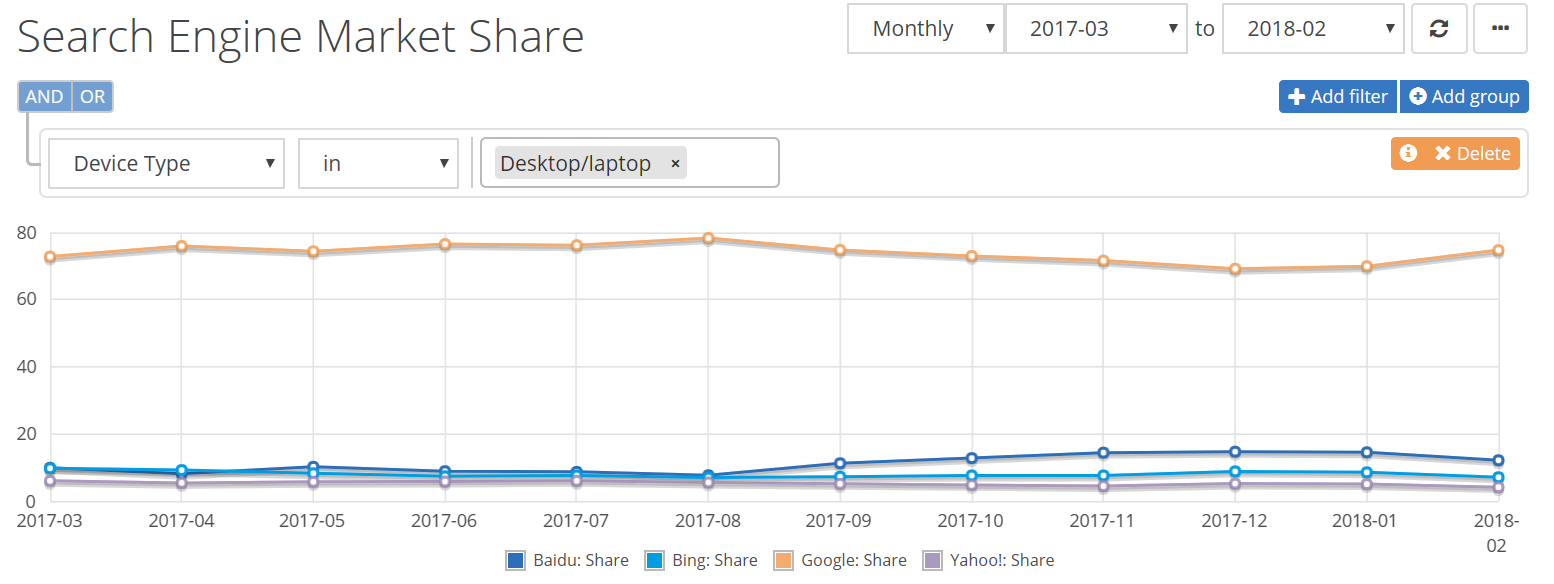
desktop search engine market share

So, if you have a new website, you should be putting most of your energy into ranking on Google, right?

Well, let’s look at it this way:

If you were traveling from the East Coast to the West Coast, would you only take a single road?

What would you do if there was construction? Or, what if someone built a newer, better, and more direct highway?

Would you insist on staying on the same route?

I bet you wouldn’t.

You’d be willing to switch to a different route, and then maybe you would switch to another one later. You’d keep taking different routes until you finally arrived at your destination.

There’s no question that Google is a great road to take. It’s wide, it’s clear, and it’s direct.

And if you use AdWords, it’s a little like taking a superhighway to your destination – a superhighway with a lot of tolls.

The problem is that Google makes changes to that highway all the time by changing its algorithms (an estimated 500-600 times a year).

Sometimes, those changes can leave you stranded on the side of the road (think Panda 4.1 in 2014).

You may have spent a lot of money on that trip.

If you put all your eggs in the Google basket, you could easily end up with no eggs and an empty wallet.

So, you shouldn’t put all or most of your energy into chasing Google and AdWords when you have a new website.

But how do you get website traffic without relying on Google? Believe it or not, it’s possible.

And you can even do it for free.

I’m going to tell you how.

You can’t ignore Facebook

You might have heard that Facebook organic reach is dead or users are fleeing from Facebook.

But don’t worry. Even if new Facebook sign-ups have leveled off or user numbers are going down, Facebook still has 1.8 billion monthly users worldwide.

That’s a lot of people.

Even if Facebook loses a couple of million users, it still has a lot of people.

So, if it makes sense for your business to be on Facebook, be there. But be there for more than just the socializing.

Use Facebook and other social media networks as hubs that you can link to your website from.

From Facebook, you can link to a blog, e-book, consultation offer, or somewhere else on your site.

Facebook lists your website right there for everyone to see. And when someone clicks on a post, it takes them directly there.

neil patel shared a link on facebook

It’s true: Facebook’s organic reach is down. But it certainly isn’t gone.

Look at it this way: If you have 1,000 followers and a mere 2% of them see your posts, that’s still 20 people. 20 people may not sound like a lot, but any one of them could still buy from you.

The important thing is to remember the social part of social media.

Treat your page followers like you would treat people if you were networking IRL: Respond to concerns, answer questions, and engage on a regular basis.

For example, look at this example from MailChimp:
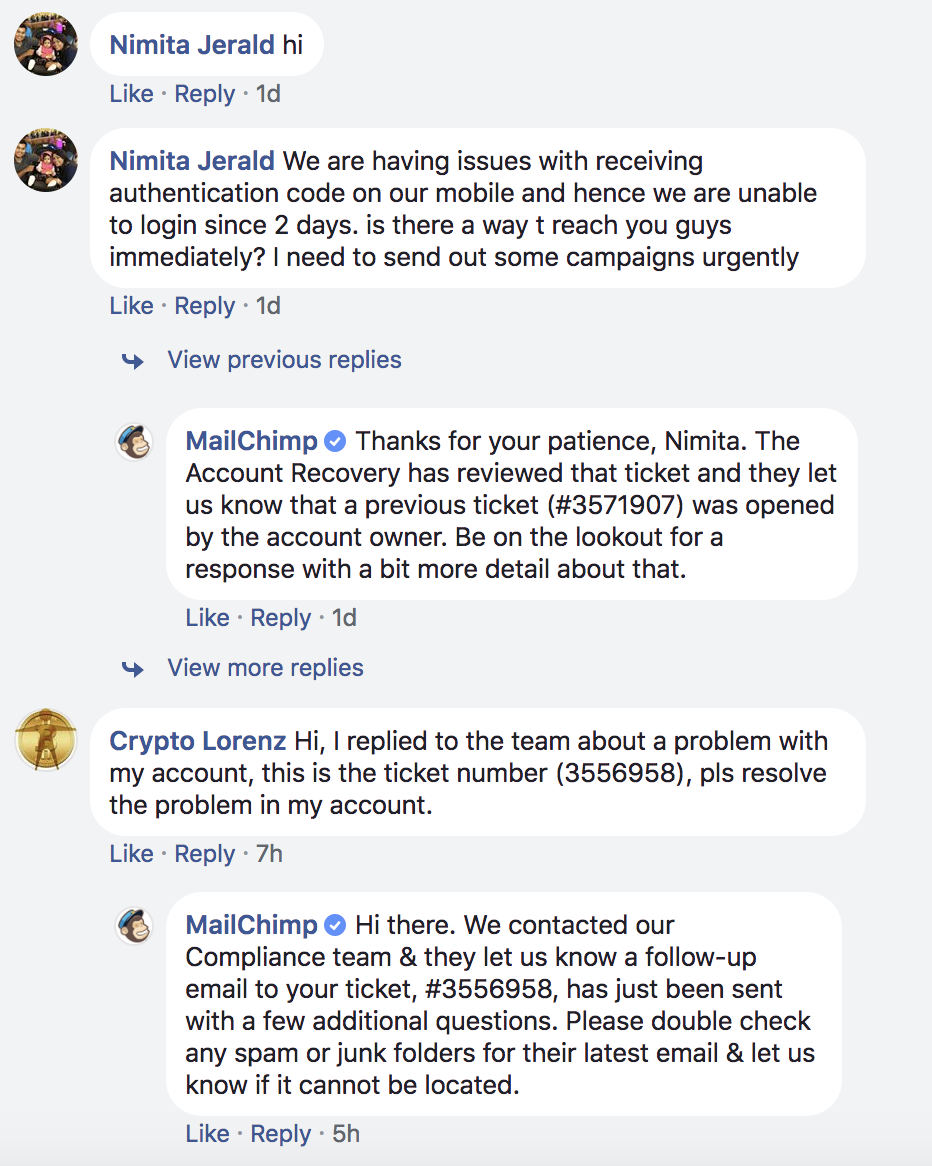
mailchimp comments on facebook

People like working with people they like.

A good place to start that relationship is on social media.

SlideShare is a hidden gem

SlideShare is an information-sharing site that LinkedIn owns. Think of it as PowerPoint with a purpose.

The content on the site comprises some 18 million uploads of slide presentations and infographics in 40 content categories.
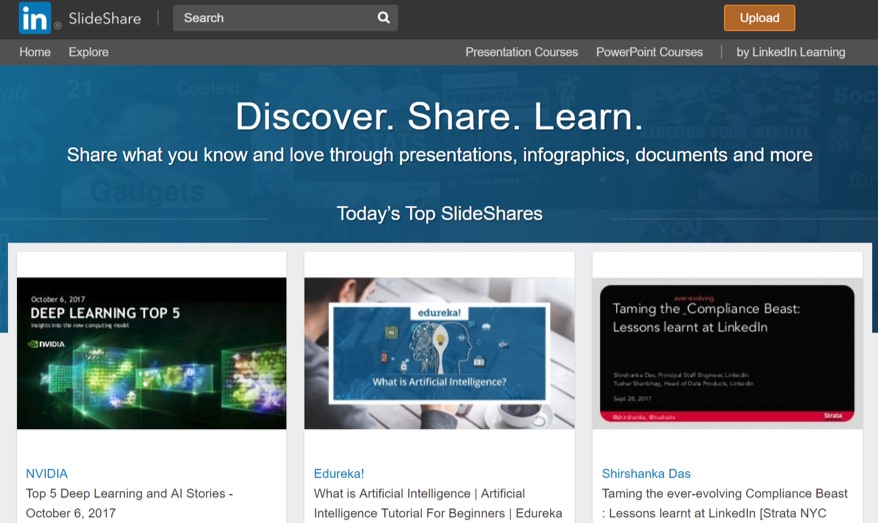
linkedin slideshare

You can find information about anything that anyone could ever want to know on SlideShare in the format of a PowerPoint, PDF, Keynote, or OpenDocument presentations. And when you make a presentation, you can make it public or private.

Some 80% of SlideShare’s 80 million visitors come through organic search. That’s proof that it can be a useful tool for driving traffic to your website.

The great thing about SlideShare is that you can use your existing content to create killer presentations.

You can take an old blog, update it, and format it for a slideshow. Or, you can break down an e-book you’ve published and create a new presentation.

Search Engine Journal uploads their webinar presentations to SlideShare.
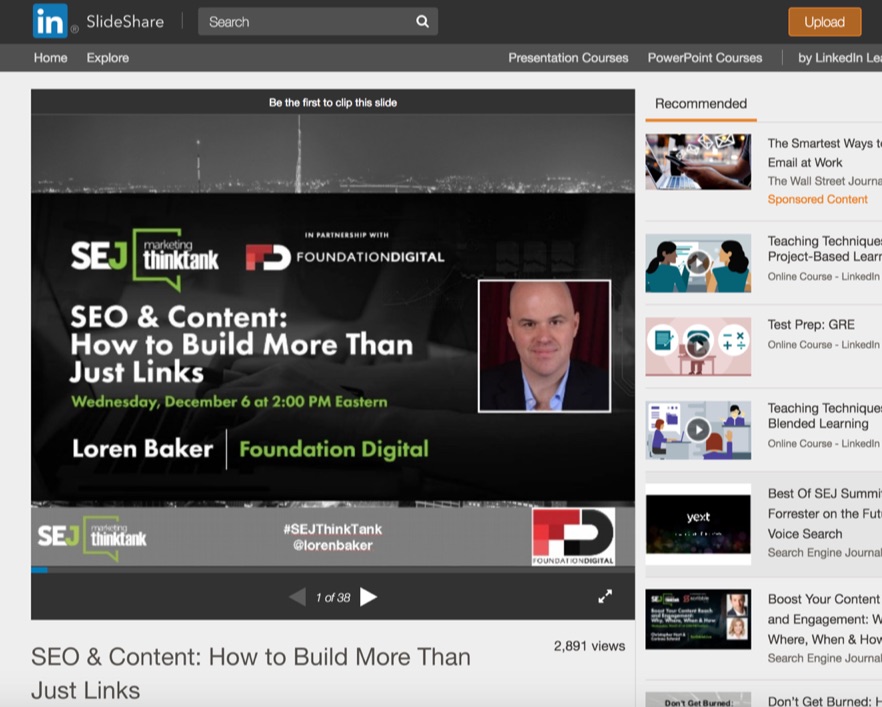
search engine journal slideshare

If you’ve recently given a presentation at a conference, upload it to SlideShare and give the content a second life.

Matthew Darby from HubSpot does this, too.
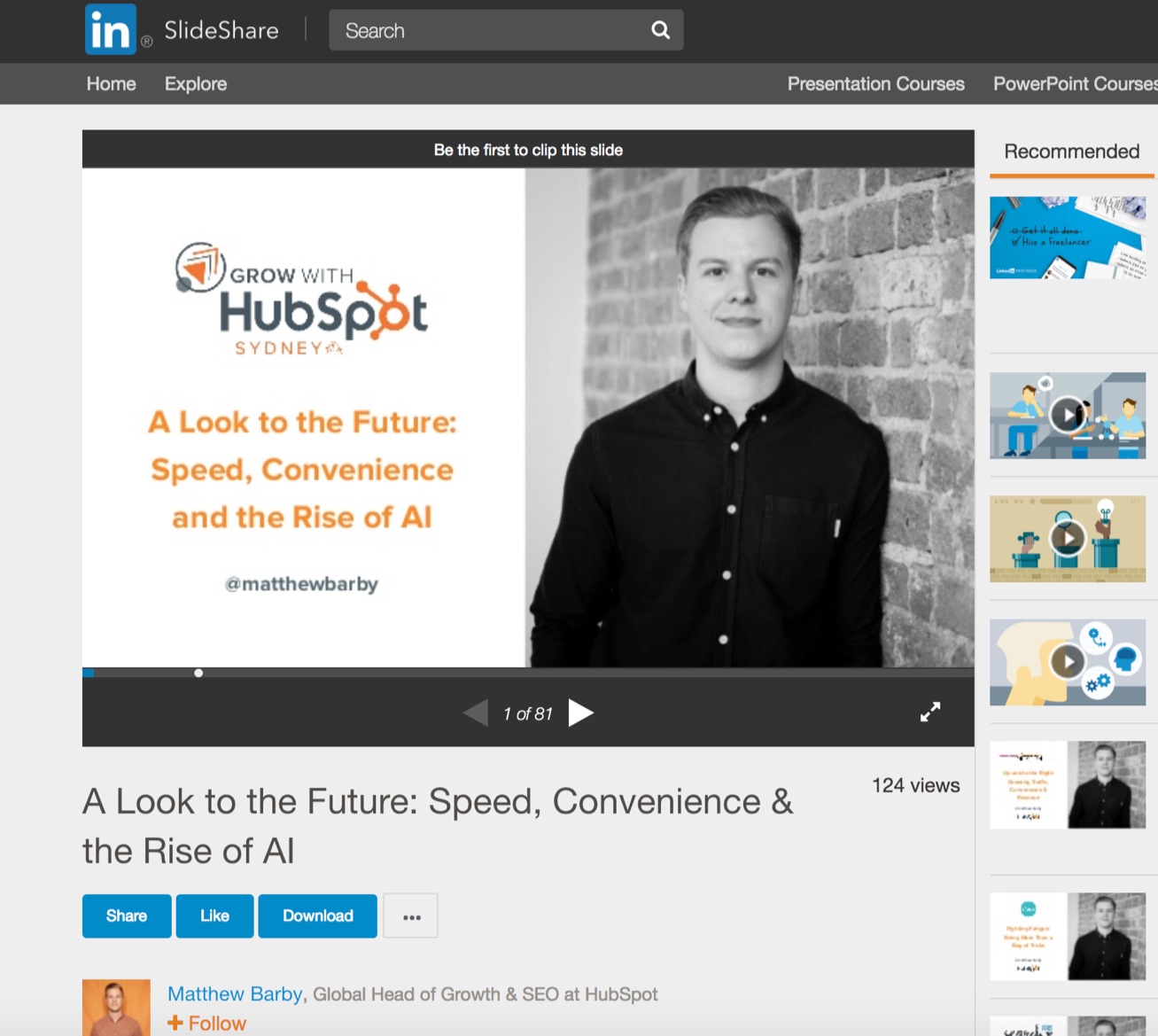
grow with hubspot slideshare

The results might surprise you.

Traffic Generation CafĂ©’s Ana Hoffman chronicled how she got 200,000 views, 400 new Facebook fans, and 1,400 clicks to her website by publishing nine presentations over 30 days.

SlideShare, she says, is now her second-largest referral traffic source.
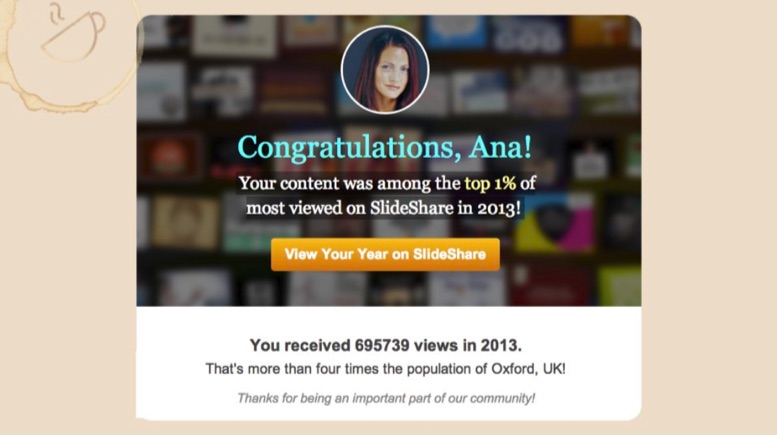
congratulations ana slideshare

Only 19% of B2B marketers use SlideShare, which presents a big opportunity for you to make use of the network before everyone else is using it.
knowledge well presented linkedin slideshare

You must be a LinkedIn member to use SlideShare. If you’re not a member now, you definitely should be. Start by signing up for a free account.

Once you’re a LinkedIn member, you can use SlideShare.
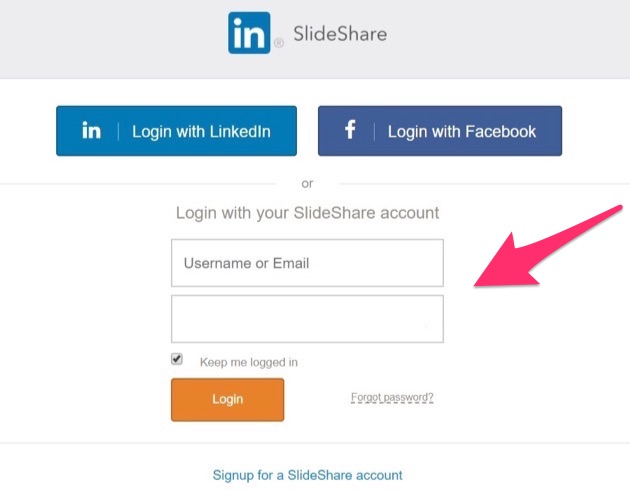
login with slideshare

Now, you can upload your own presentations.
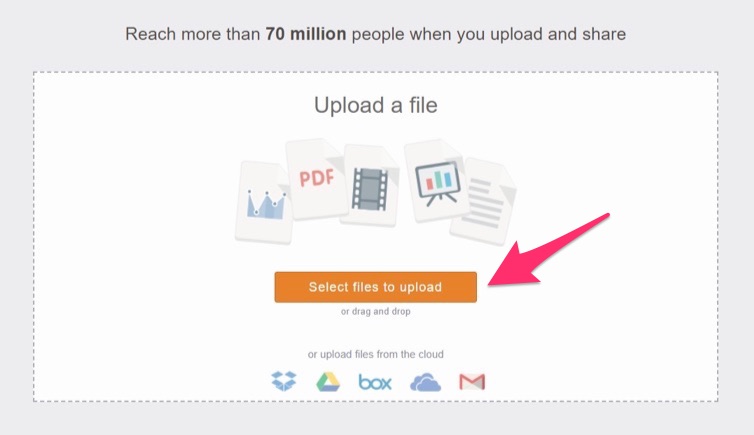
select files to upload to slideshare

Once you’ve uploaded a presentation, be sure to share it on Facebook, LinkedIn, your blog, and everywhere else.

SlideShare includes analytics, so you can look at your stats and see which decks get the best results.

LinkedIn publishing will get you noticed

You know LinkedIn as a valuable business network. But did you know that, by using the publishing tool on LinkedIn, you can drive more traffic to your website?

You’ve probably seen the influencer posts on your LinkedIn feed, but the people like Richard Branson aren’t the only ones who can publish on LinkedIn to get noticed. You can, too.

richard branson bill gates climate change article on linkedin

A lot of people publish on LinkedIn, so it can be hard to get noticed. The key is to post valuable, relevant content.

If people like what you have to say, they’ll want more. That will drive traffic to your website.

Remember: You’re not trying to sell something or promote yourself. You’re trying to provide useful information that will help someone solve a problem.

If you’ve ever posted on a blog, publishing to LinkedIn is pretty intuitive.

Even if you’re publishing for the first time, the process is straightforward.

There’s a space right at the top of your feed where you can post something to your newsfeed.

Or you can choose to write an article.
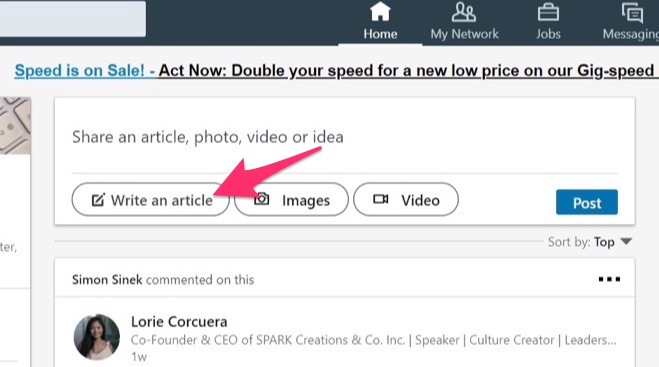
write an article linkedin

The interface is simple. There’s a space for a header image and an area where you can start writing.
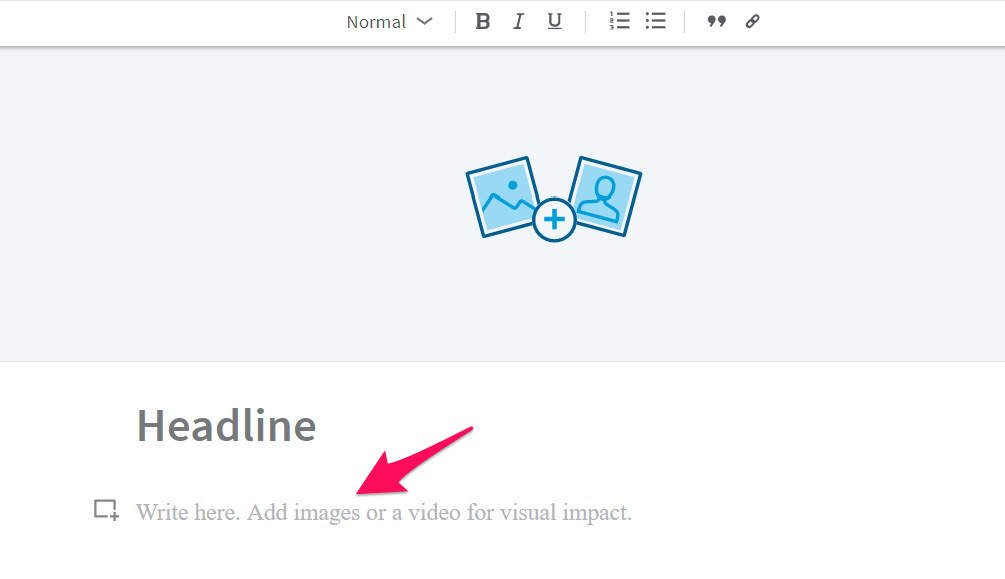
article editing linkedin UI

There are a few important things you’ll want to remember. Write an attractive and enticing headline, include images, and use h1 and h2 heads like you would on a blog.

Just take a look at some of LinkedIn’s key influencers like Bill Gates.
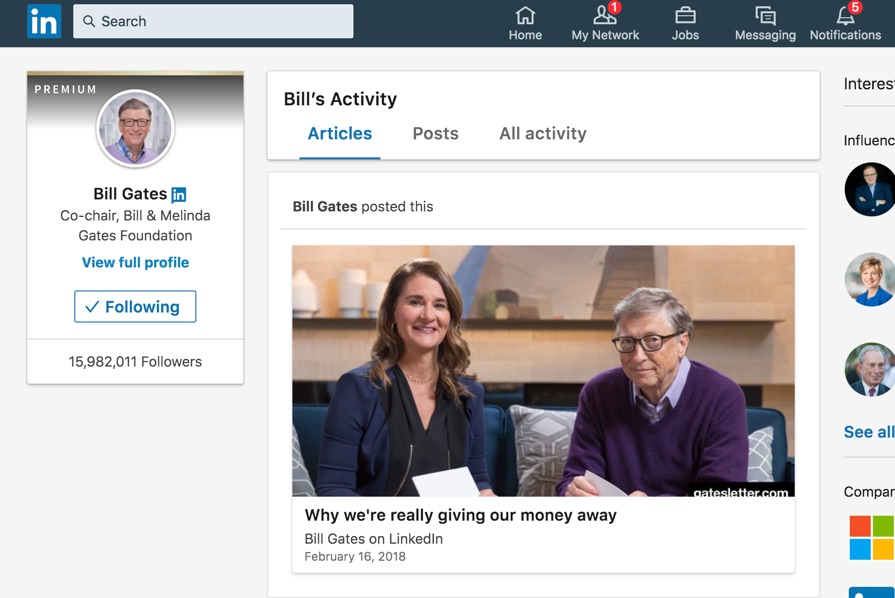
bill gates linkedin

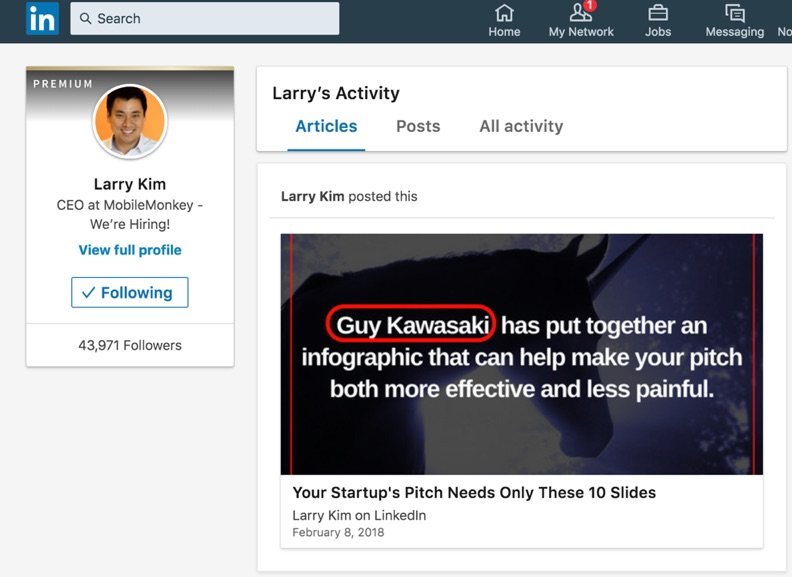
Larry Kim is also a great example.

larry kim linkedin

Follow in the footsteps of influencers like these to gain a following with LinkedIn.

Join the conversation in Facebook groups

Relevant groups on Facebook give you a chance to contribute to conversations in your area of expertise.

Think of it as networking online.

Do it naturally like you would at a dinner party: politely join in when you have something relevant to add.

Don’t talk only about yourself and don’t try to sell.

Groups are for people with similar interests who want to share ideas and information.

Genuinely engaging in this way will give you more visibility. You’ll build relationships and drive traffic to your website.

If you’re going to engage with groups, follow the rules of polite discussion: Be kind, don’t be disagreeable, and use common sense before hitting “send.”

You can find Facebook groups on your Facebook page by clicking on the down arrow in the upper right-hand corner.
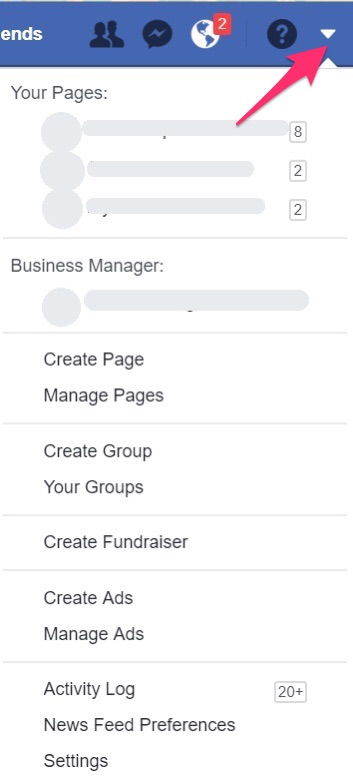
facebook right hand corner dropdown

You’ll find several categories where you can start your search:
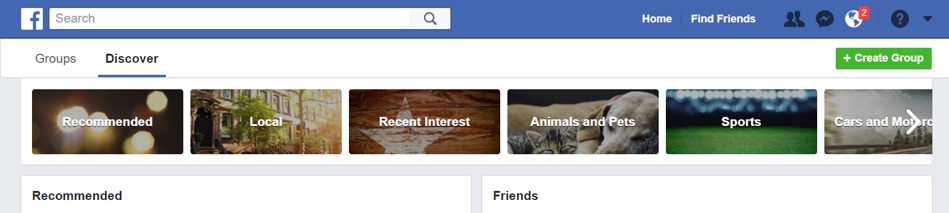
facebook discover

Browse the categories, and then click on a category you like to get some suggestions.

Choose a group and click “+ Join.”
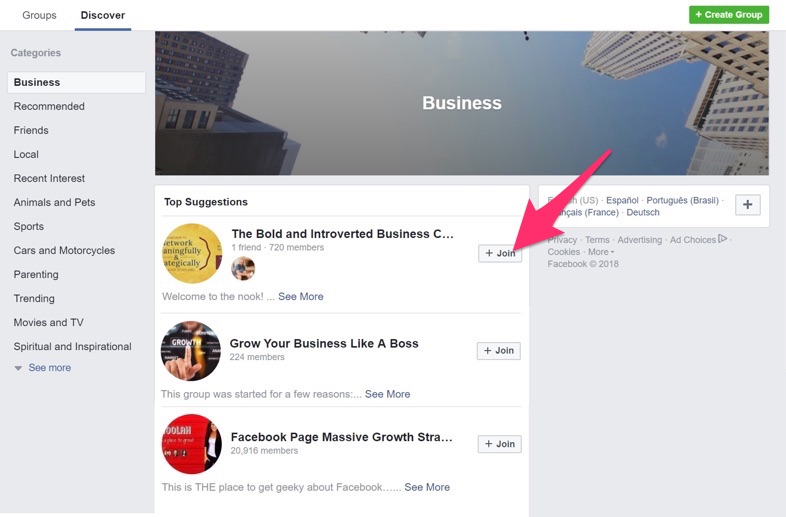
join business groups on facebook

Some groups will allow you to simply click to join. Others may ask you some questions before allowing you to join.

There are public and closed groups.

Snapchat News and Education is a public group for people to learn and share tips about Snapchat. Vincent Orleck, the social media director at AtticSalt, created it and runs it.
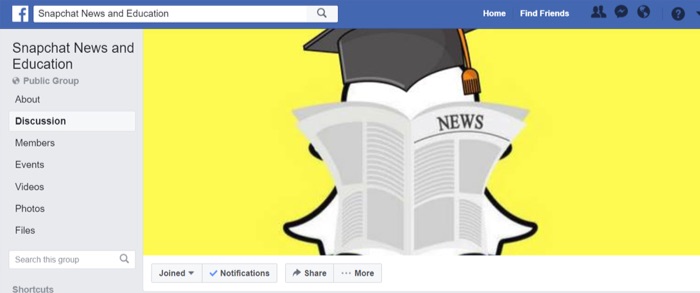
snapchat facebook page

But people share more than just Snapchat tips. They also discuss Snapchat-related issues and marketing.

This is an example of a place where you could lend your expertise.
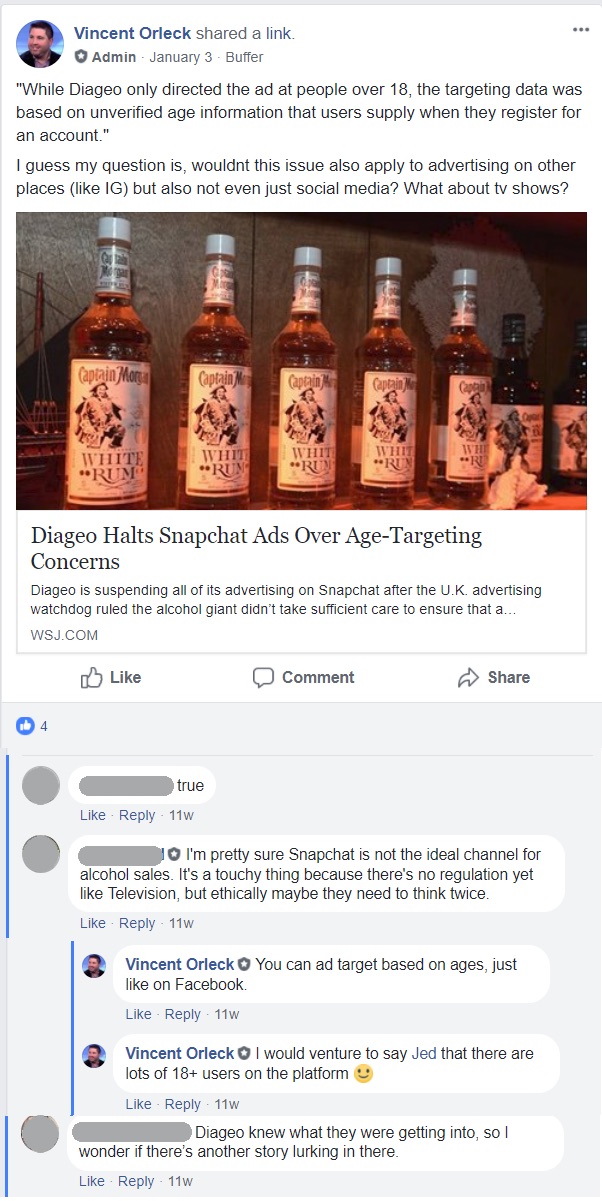
vincent orleck facebook comments

Be sure the groups you choose are the ones that are relevant to you before you ask to join. And be sure to read the group’s rules.
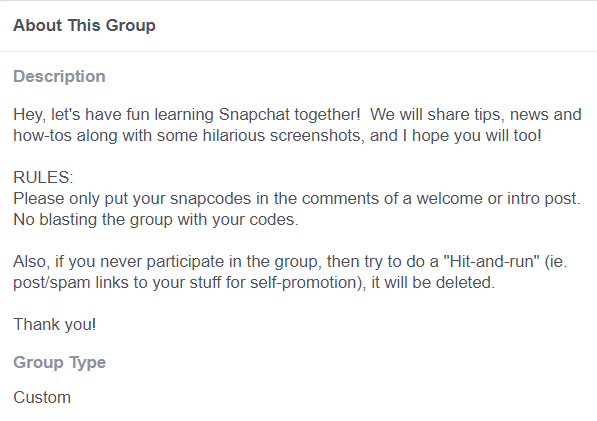
facebook about this group

LinkedIn groups attract industry professionals

With more than 500 million users and 9 billion content impressions on LinkedIn feeds every week, LinkedIn packs a lot of power.

And LinkedIn users are there for one reason: business.

LinkedIn groups are an ideal place for you to keep up with relevant information in your industry, share information, network, and build brand awareness.

To find LinkedIn groups, go to your homepage, click on the grid in the upper right-hand corner, and then select “Groups.”
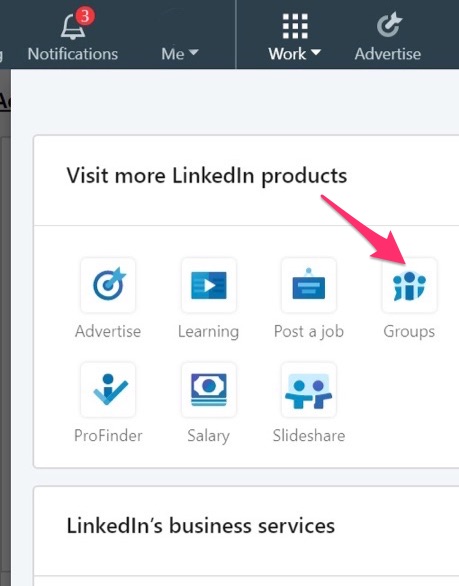
linkedin work grid

You can either search for a specific group in the search bar or click on “Discover” for recommendations from LinkedIn.
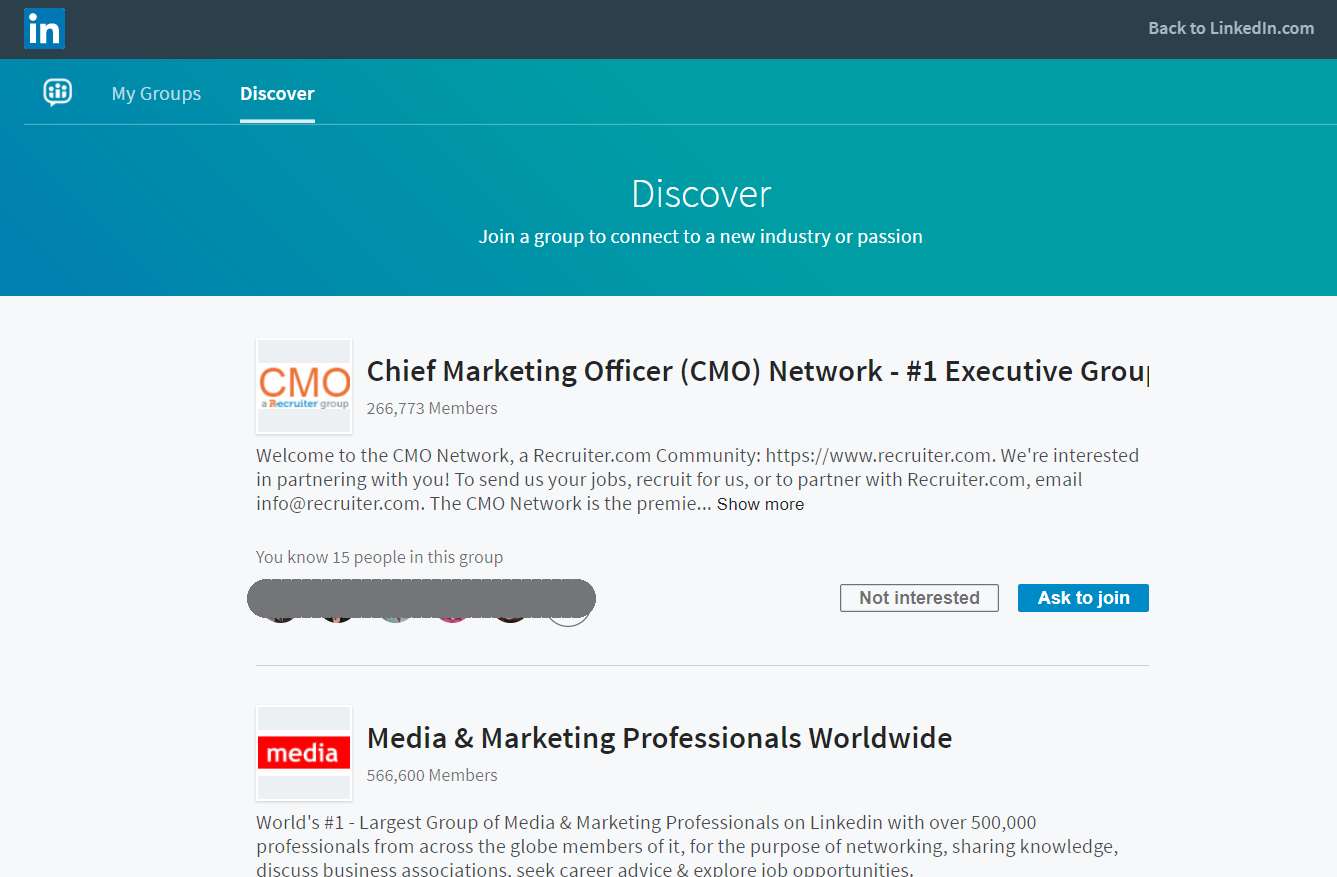
linkedin discover groups

Social Media Marketing is one of the largest social media marketing groups on LinkedIn with over 1,800,000 members.

It’s a forum for advertising and marketing professionals who are actively engaged in social media.

By posting to a group or adding to the conversation, you can build brand awareness and increase traffic to your website.
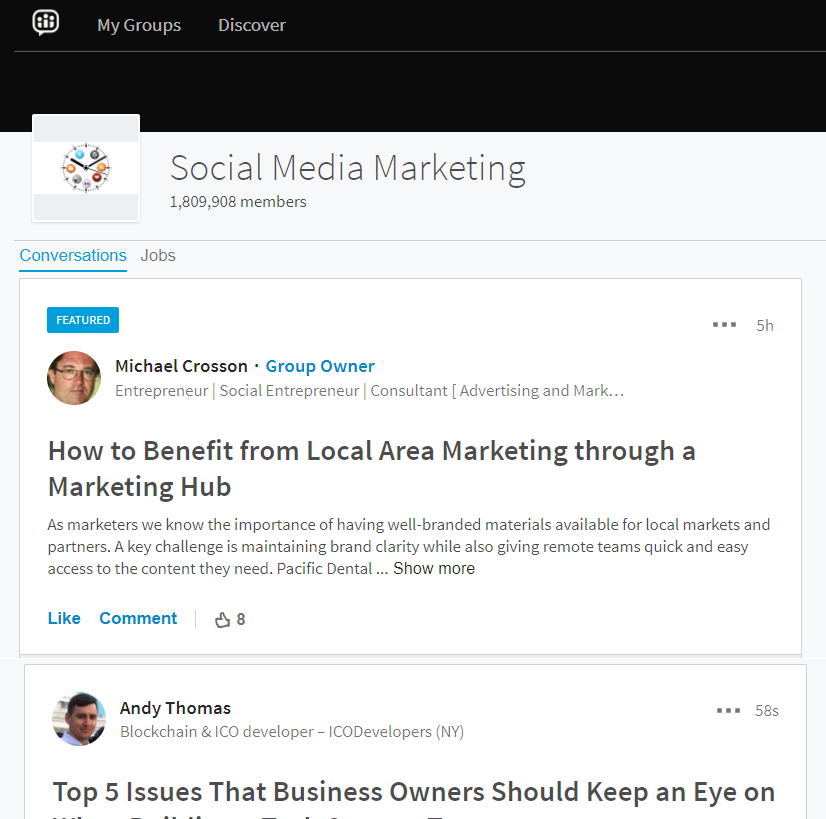
social media marketing linkedin group

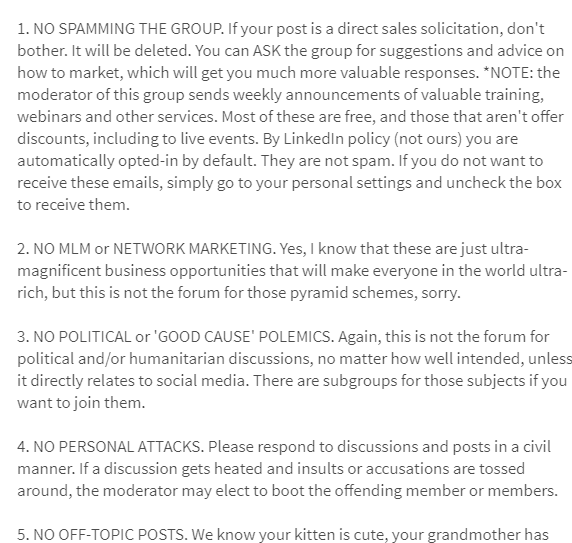
Again, engage in relevant conversation and don’t spam with promotion.

And, once again, be sure to read the rules.
Twitter chats drive traffic

Go to Google and search for “Twitter chats [the category you are interested in]” and find lists of relevant chats.

You can find chats for marketers that meet almost every day of the week, so there’s bound to be one that fits your schedule.

The chat #sproutchat meets on Wednesdays at 2 p.m. CST.

Generally, users ask questions one at a time (Q1, Q2, Q3, and so forth). After each question, visitors respond.

You can join in and answer, too. You may also be able to pick up some useful tips or just have a little fun.
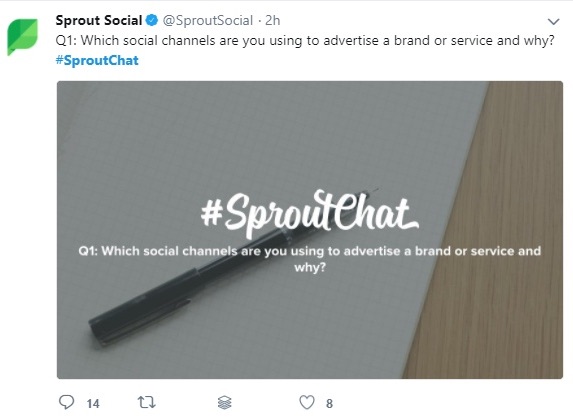
sproutchat twitter questions

You can also use free tools like TweetChat and Twubs. They’ll help organize your chats, slow down the feed, and automatically add the hashtag to your reply.

Believe me: that last one is really helpful. Twitter chats can move fast, and it’s easy to forget to include the hashtag when you respond.

By automatically including the hashtag, you ensure that your responses stay and that other users can see it in the chat stream.

That way, if people like what you have to say or want to learn more, they’ll look at your profile and go to your website. Of course, you want to make sure that you have your website URL in your profile so that users can easily navigate to your site.

Get traffic with knowledge through Quora

Quora is a social Q&A website with more than 190 million monthly users. On Alexa, it ranks 128th in the world and 67th in the U.S.

People ask questions, and other people provide answers. That’s it!

There are hundreds of thousands of topics on Quora, so you’re sure to find something in your wheelhouse.
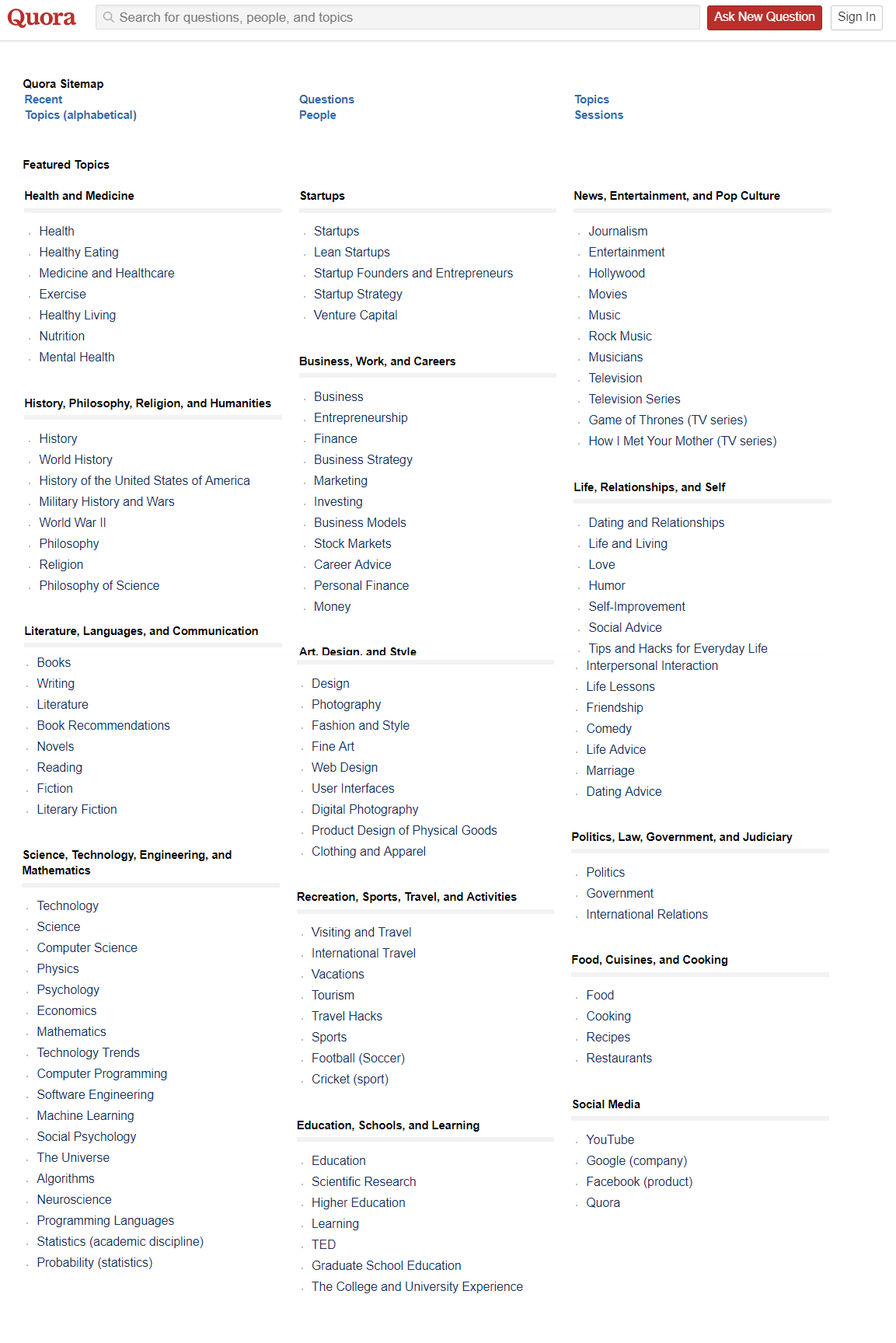
quora sitemap

To join, you can use your Google account or your Facebook account. Or, you can create a login using your email and a password.
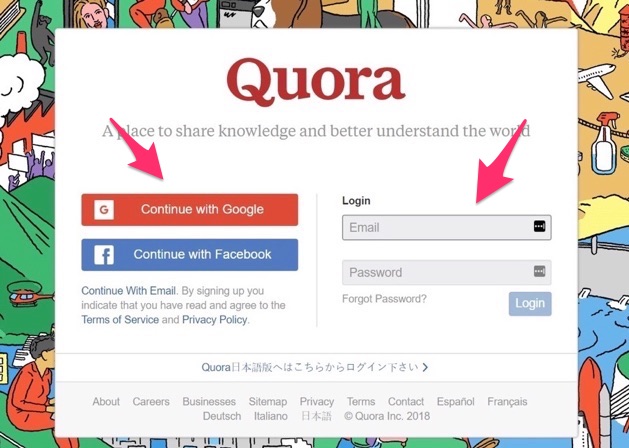
signup or login to quora

Quora will ask you for topics you want to follow and areas in which you have expertise, but you can fill that out later if you want. Pick at least ten topics.
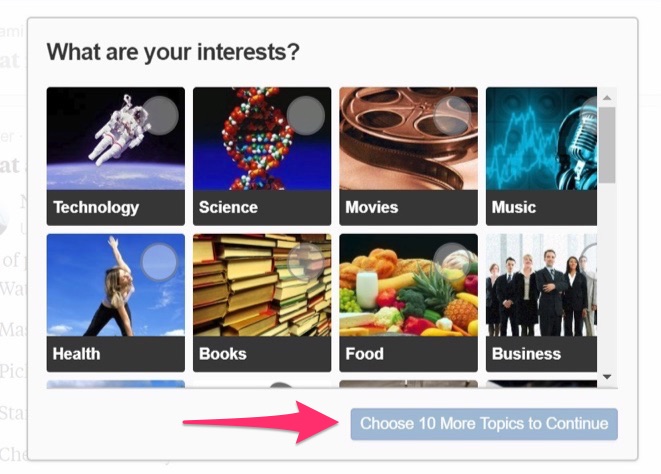
choose interests in quora

By participating on Quora and providing useful answers to users’ questions, you can drive referral traffic – traffic that comes to your website from another site.
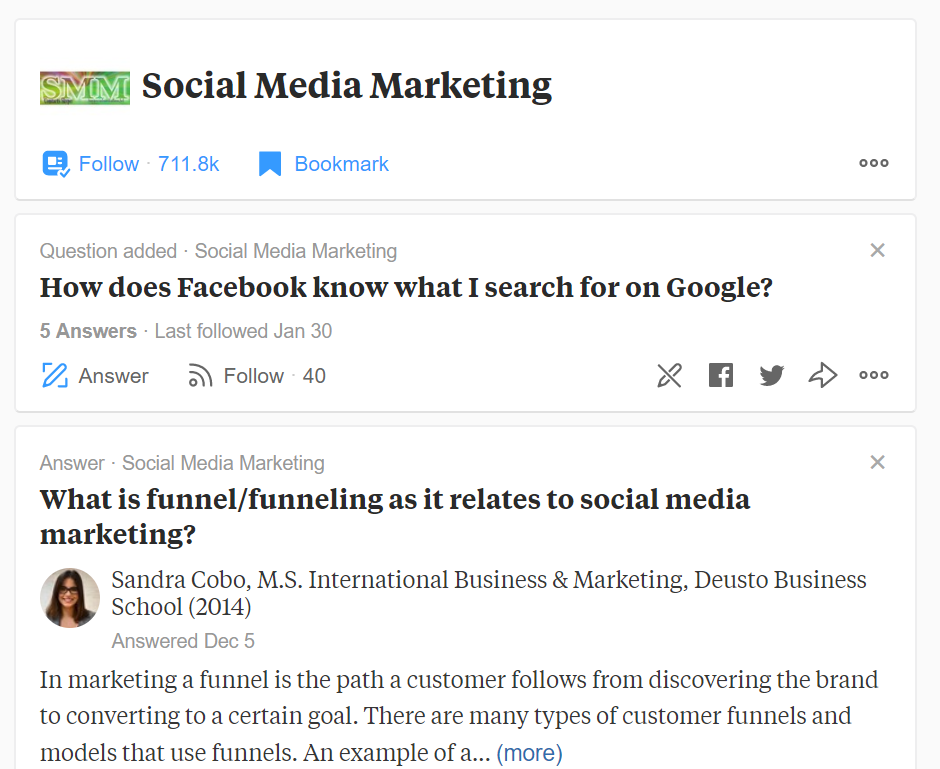
social media marketing on quora

The more referral sources you have, the more you’ll drive a steady stream of traffic to your website.

These are visitors who specifically go to your site because they want to learn what you have to say.

That’s the best kind of traffic there is.

Give help, get traffic on HARO

HARO is shorthand for Help a Reporter Out. It’s a service that journalists use to crowdsource information for news articles.
im a source HARO

According to the HARO site, there are 50,000 journalist queries each year. The service reaches some 800,000 sources and 55,00 journalists and bloggers.

The premise is simple: a journalist needs information for an article and reaches out to find experts in the field who can provide information (and get free media coverage).

These journalists work for some major news outlets like Time, the New York Times, Mashable, and Reuters. It’s pretty sweet to get coverage from those outlets.

The service is free for sources. You simply register, monitor, and pitch.
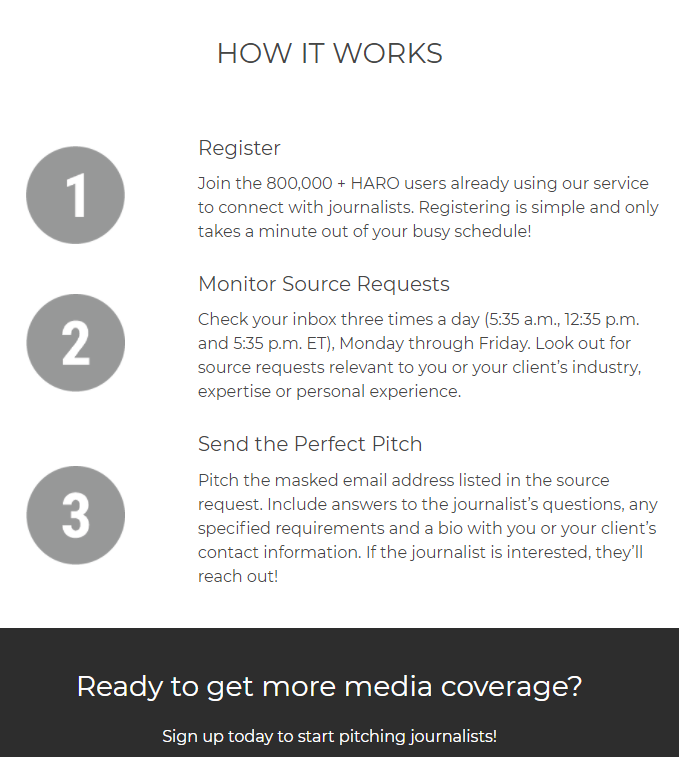
how haro works

There’s an option to sign up for free, but you can also pay for subscriptions that have more bells and whistles.
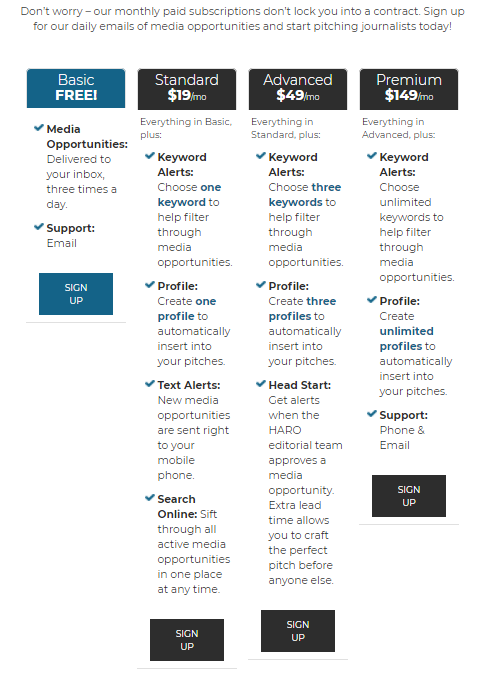
haro subscriptions

Make the most of your email

Most of us use email as our main mode of business communication. If you’re like me, you’re receiving, sending, deleting, and responding to email all day long.

Think of all the emails you send. Are you wasting the valuable real estate at the bottom of the screen?

All you have to do is add the URL to your website (with a link) below your name, and voila! You’re promoting your website and driving traffic there.

Or, you can promote a blog post that will drive traffic to your site.
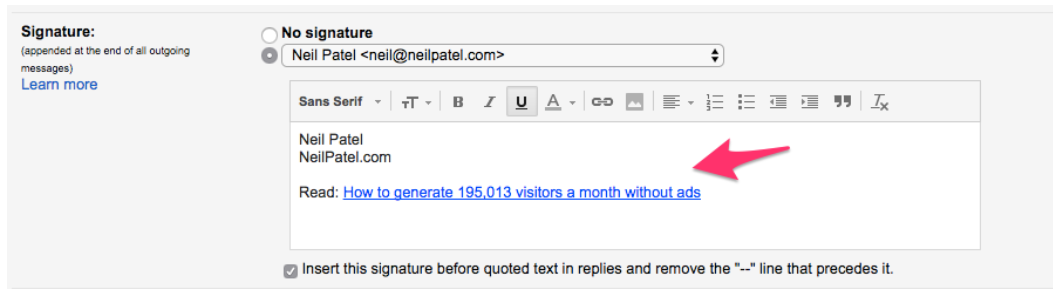
neil patel email signature

It couldn’t be any easier for people to find your site. All they have to do is click.

The average number of emails one person sends for business each day is 40.

If you have ten people in your office, and they all include the company website in their signatures, you’ll be promoting your website 400 times each day.

And you’re doing it for free!

But that’s not the only way to put your email signature to good use. I offer some other suggestions:

If you use Outlook and need help adding a link to your website in your email signature, check out this guide. For Gmail, go here.

Blog longer and less frequently

To blog or not to blog? That’s the question in 2018 as content reaches a saturation point and it’s harder to set yourself apart from the pack when it comes to content.

“Harder” doesn’t mean “impossible,” however. You can still effectively use a blog to drive traffic to your website.

I know what you’re thinking:

“Isn’t blogging all about SEO and driving traffic from organic searches?”

It’s true: A huge benefit of blogging is that you’ll drive more traffic from the SERPs. But that’s not the only way that blogging can bring visitors to your site.

In addition to improving SEO, long-form blog content also results in more social media shares and greater visibility for your company.

If you want to thrive on social media, you need to give users something worth sharing.

You can’t expect users to keep sharing your short tweets, status updates, and pictures of your company and employees.

That’s all great as supplemental content. But what users really want to share is high-quality content that’s genuinely useful.

So here’s the takeaway: write and post quality blogs that provide value. You have to help readers solve a problem, educate them, or entertain them.

Publish longer posts, but publish less frequently. Rather than three or four so-so posts a week, write and post one detailed, quality post that’s 1,500 to 3,000 words in length.

In its annual blogger survey, Orbit Media discovered that there was a direct correlation between longer posts and bloggers reporting “strong results.”
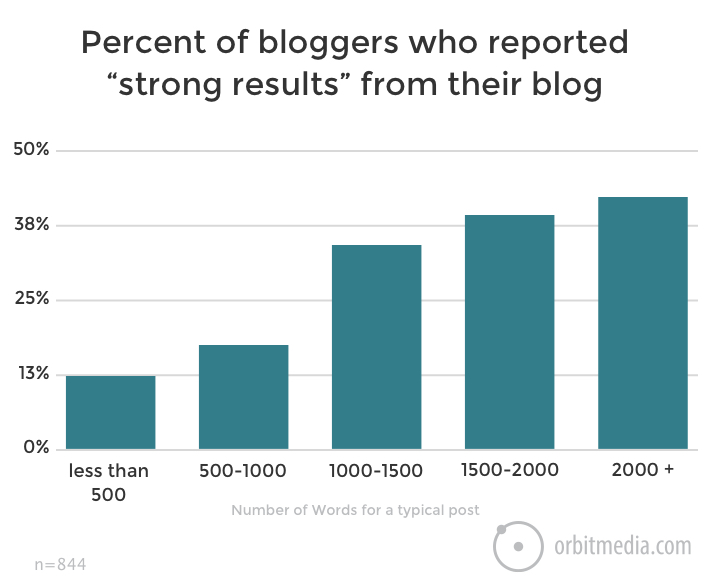
bloggers with strong results

So, take the time to do the research and put out blogs that are chock-full of useful and compelling information.

By publishing only when you have something substantial to say, you’re like the person who never raises their voice: When they finally do yell, everyone notices.

Just make sure that your blogs are attractive, reader-friendly, and have lots of images. Users love visual content like pictures, graphics, and videos.

Be sure to include recent (and accurate!) data to support your topic.

And, for goodness sake, make sure your spelling and grammar are spot-on. You don’t want to lose a reader for good because of poor mechanics and sloppy writing.

Try guest blogging

It may sound counter-intuitive, but spending your precious time writing a blog for another site – and for free – really can pay off.

The biggest benefit is that you can include links on a guest blog and drive traffic to your website.

And if you can drive traffic to a specific landing page where you gather valuable email information from visitors, then you can capture leads and add them to your subscriber base.

Then, you can use good, old-fashioned email marketing to drive more business.

If you do it right, guest blogging can be a powerful way to position you as an expert and earn your site valuable backlinks.

You should only guest blog on quality sites, and you should make sure that your guest posts are detailed, actionable, and engaging.

Don’t guest blog just for the sake of guest blogging.

Be strategic about who you associate yourself with. You’re aiming for authority and reputation, not volume.

And it’s not a matter of asking every blogger you find if you can write a guest post for them. You need to look for guest blogging opportunities, which can take some time.

Keep in mind that it’s easier to get other bloggers to accept a post from you if you provide them a little taste up front.
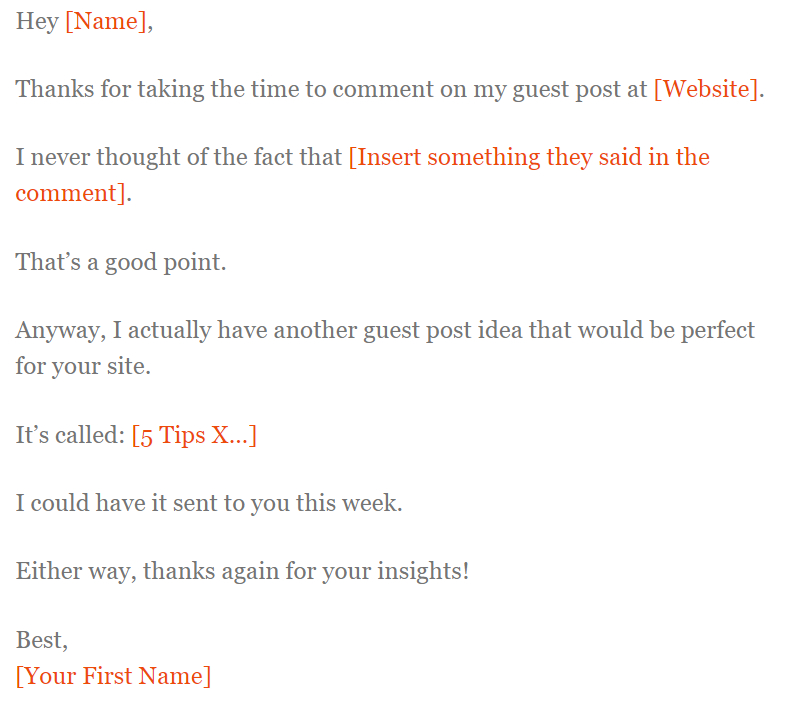
guest blogging email templates

So find the best opportunities, focus on the right topics, and write amazing copy that provides value for readers.

Readers aren’t going to follow a link to your site – and ultimately part with their email information – unless you give them something they like or need.

And that means providing long-form, helpful, valuable content.

Just because you’re writing for someone else, that doesn’t mean that you shouldn’t take as much care with what you write as you would on your own site.

Play nice with others, and they’ll play nice with you.

Offer a webinar to drive traffic

Too often, business people forget that they have something other people don’t have: knowledge about their own industry or niche.

You might take it for granted, but other people don’t.

Consider holding a webinar. You can help others out by sharing some of your knowledge while driving more traffic to your website.

Webinars drive web traffic in several ways.

First, by promoting the webinar, you’ll draw people to your website even if they don’t sign up.

You’ll draw people back to your website – and attract some new viewers – when you post the webinar recording to your website and promote it on social media.

You can turn the webinar into a SlideShare presentation and get even more traffic from people who go to your site after viewing the SlideShare.

And, if you’ve done a good job, attendees will tell other people about their experience, and you’ll get more traffic from word of mouth.

According to ConvertKit, the numbers are compelling.
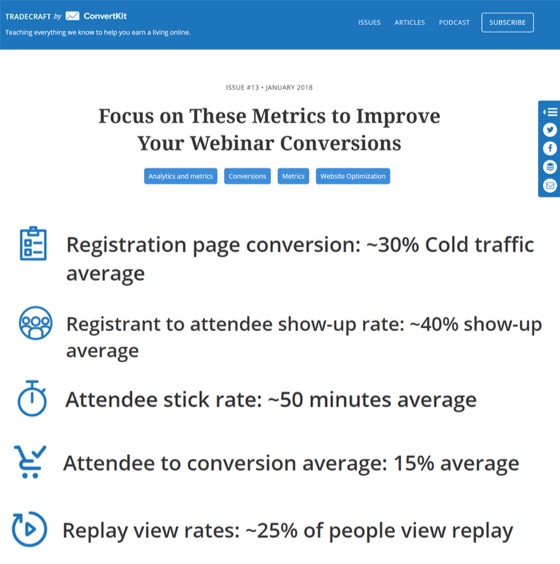
convertkit webinar stats

Let’s look at that by the numbers:

webinar sales funnel

That’s not bad for an hour of your time.

If you have the right topic and target the right people, your product will provide the solution to a problem they have.

Why not give them what they need while driving traffic to your site and making money at the same time?

Of course, webinars aren’t seat-of-your-pants, off-the-cuff affairs.

Webinars require planning, practice, and lots of promotion.

You’ll have to promote your webinar like crazy. It’s harder to do without paid ads, but there are ways to do it.

You can tell your subscribers about it with an email blast. But be sure to include personalization, and be warm and friendly so the recipient feels like it’s a private invitation.

Post to Facebook, Twitter, LinkedIn, and other appropriate networks you use and include a link that goes to a sign-up page.
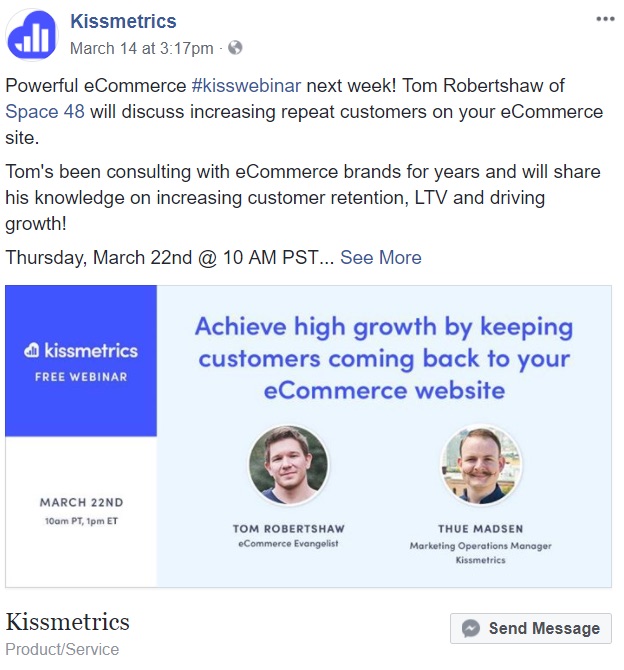
kissmetrics webinar ad on facebook

Let any groups you belong to know about it if it’s relevant to them and if you’ve already built relationships. But don’t go in cold.

Yes, it will take a lot of time and effort. But the time and effort are well worth it when you consider the possibility of new business, visibility, and, of course, web traffic.

Want more tips from me? I give 7 of them in this video:

Conclusion

There’s no doubt that Google is a big player when it comes to generating web traffic and that AdWords can help you get where you want to go – fast.

But not everyone who is just starting out can afford to go all in on AdWords.

Algorithm changes sometimes have effects on website traffic that should prevent you from spending all of your time and resources chasing Google rankings.

I’ve given you more than ten tactics that will help you drive traffic to your new website without relying on Google. And the best thing is that all of the tactics I’ve shared with you are completely free.

Follow them, and your website visits will steadily increase. You’ll be well on the way to making your brand visible and attracting leads.

What other ways have you found to generate web traffic without Google?

About the Author: Neil Patel is the cofounder of Neil Patel Digital.

Reverse Phone - People Search - Email Search - Public Records - Criminal Records. Best Data, Conversions, And Customer Suppor

Friday, April 6, 2018

Video games can create beneficial social connections and take on real issues

Something every woman should know - WHY MEN LIE!


GUEST: In the current social climate, the dregs of #MeToo, GamerGate, and the #NotNolan movements are poisoning the reputation of the gaming industry and are creating a dark, biased culture among gamers. However, past the mask of stereotypes and negative news coverage, research in the gaming industry reminds us that gaming is meant to be a positive…Read More

Reverse Phone - People Search - Email Search - Public Records - Criminal Records. Best Data, Conversions, And Customer Suppor

Thursday, April 5, 2018

LinkedIn Pulse: A Complete Guide (+ Examples)

Something every woman should know - WHY MEN LIE!

You blog because you want Internet users to discover your content and engage with it. But sometimes, your reach just isn’t large enough.

That’s why it’s good to diversify your content.

Creating more content and putting it in more places gives you as many views, readers, and customers as possible.

If you want to boost brand awareness and engagement, you need to be active on as many platforms as you can to spread your brand across the web.

That’s why most businesses use sites like Facebook, Twitter, Instagram, and LinkedIn in addition to their regular websites.

But some businesses are missing a huge opportunity to publish content because they don’t realize that they can post full articles to LinkedIn via LinkedIn Pulse.

There are tons of reasons why blogging with LinkedIn Pulse is a win for businesses. Here’s a complete guide to using and publishing on the platform along with actionable examples of how to do it.

What is LinkedIn Pulse?

If you want to build a good reputation online, increase your credibility, and reach a larger audience, publishing content on social media can help you do that.

LinkedIn Pulse takes social media content a step further with an online news aggregation feed. Members can share self-publish content right to their audiences.

The platform generates blog posts, insights, and news from influential industry professionals and businesses looking to extend their reach and share insider knowledge.

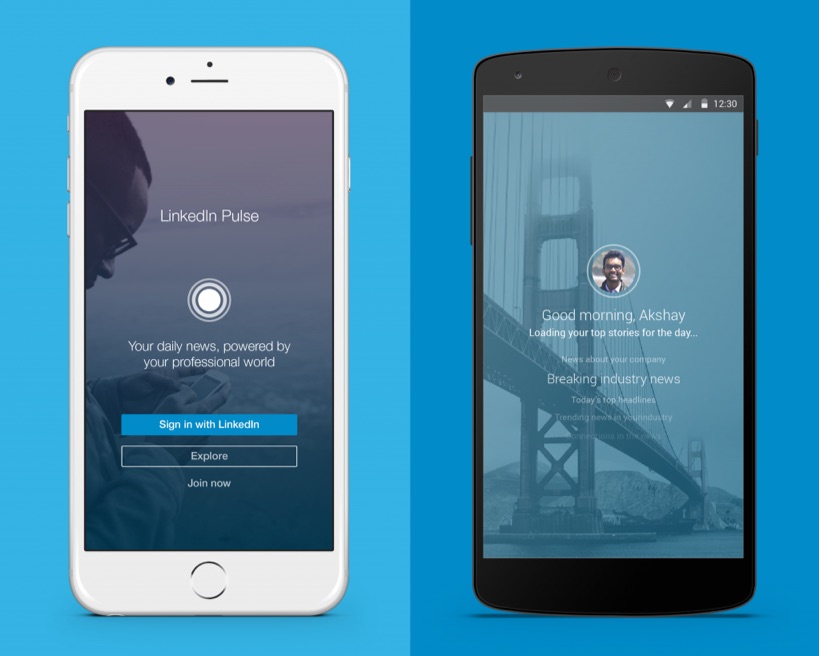
LinkedIn tailors content to each individual based on their interests. That way, users only see the content that they want to see.

linkedin pulse app

Content for the Pulse platform originally came from huge, well-known influencers. Now, all LinkedIn members can create and publish their own content for their followers.

If you’re a business or a thought leader, this is an easy and efficient way to build rapport. After all, most businesses are already using LinkedIn in some capacity.

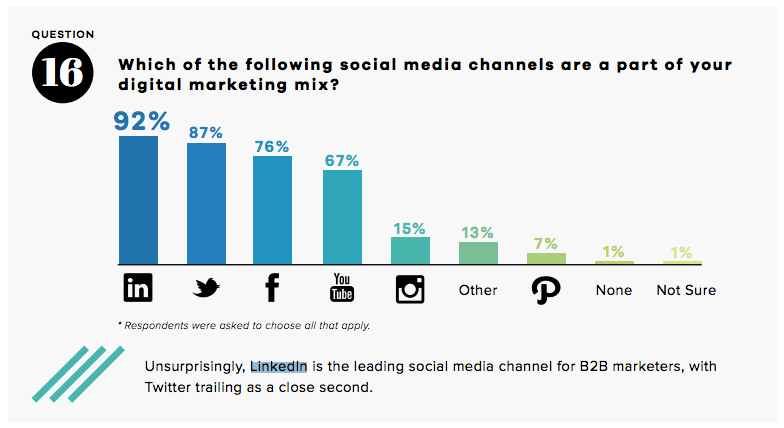
According to DemandWave, 92% of B2B marketers include LinkedIn in their digital marketing mix.

linkedin pulse in digital marketing

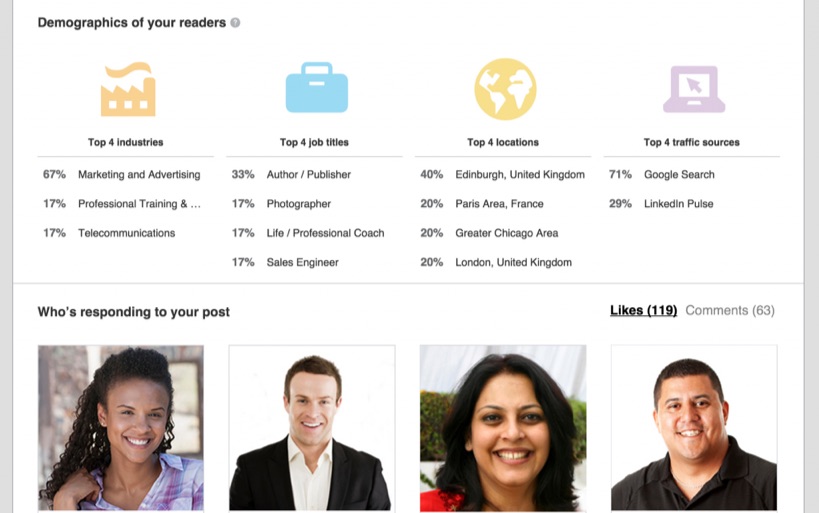
The platform also allows you to track the demographics of your readers to gain audience insights.

You can view the industries, job titles, and locations of your readers as well as the traffic sources that they are using to view your content.

linkedin pulse demographics of your readers

If those features haven’t already convinced you that LinkedIn Pulse can help you boost brand awareness, then read on.

Reasons why you should use LinkedIn Pulse

You might be wondering, “What makes LinkedIn pulse better than other networks?” Or you might be thinking, “Why should I worry about posting to Pulse if I already have a blog?”

One of the largest advantages of Pulse is that the sole purpose of it is to help nurture and grow professional relationships.

Because of this, Pulse is great for helping you connect with your audience on a deeper level.

Connect with your audience

On LinkedIn, your audience isn’t just anyone. You know that your content is going to reach professionals at every level of many different kinds of businesses.

And you can leverage this content to boost your visibility across the web so that you can steer your audience toward any future content that you may list on your profile.

Just like any content that you post on the web, Pulse content can help you increase your search engine visibility.

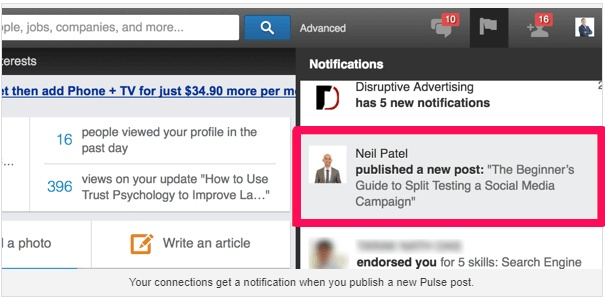
And LinkedIn will notify your connections every single time you publish a post. That way, your posts won’t get lost among the crowd.

neil patel published a post on linkedin pulse

Engage customers through useful content

LinkedIn Pulse is also great because it helps you engage customers through content that is genuinely useful.

This is possible because of the unique nature of LinkedIn. It’s a place where social and professional networking combine.

Professionals on the site are motivated to grow, learn, and consume. They want to grow and interact with a network, follow people and brands they’re interested in, and make connections.

How do users do this? They have to engage with others and deliver content that focuses on their goals.

If you create high-quality content, you can help your audience engage.

According to LinkedIn, 62 percent of members say that they engage with content because it is informative or educational. 61% say that they engage with content that is relevant to them.

If you post content that is relevant, inspiring, or educational, you’re bound to build an engaged customer base in no time.

But how does Pulse work, exactly?

How does LinkedIn pulse work?

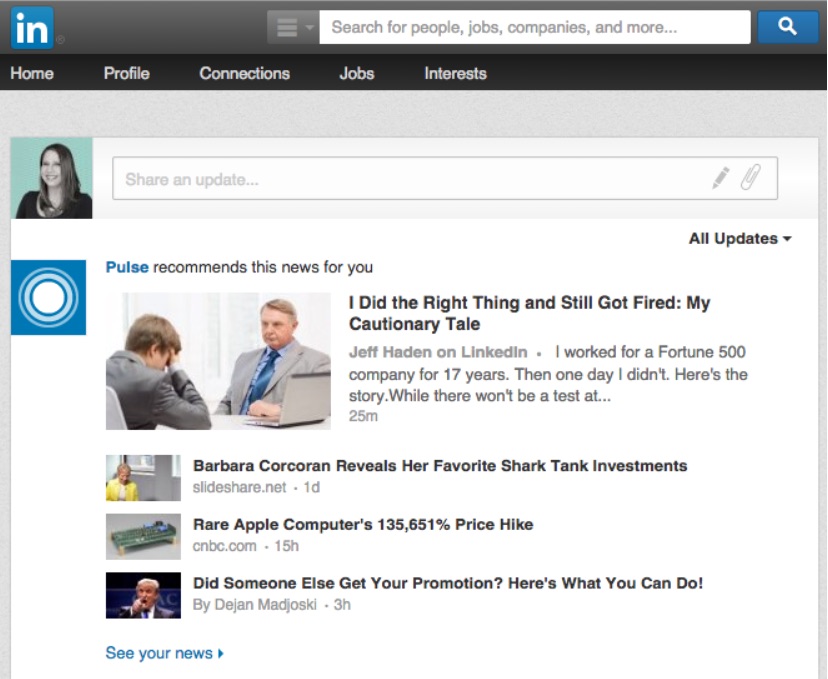
Most of the content on the LinkedIn homepage feed comes from Pulse.

Pulse users receive weekly email digests containing new posts, and users publish more than 130,000 original articles every week.

There are mobile apps for both iOS and Android. To get started, users don’t need to follow topics or publishers.

They can just log in to LinkedIn to get personalized news based on their industry and connections.

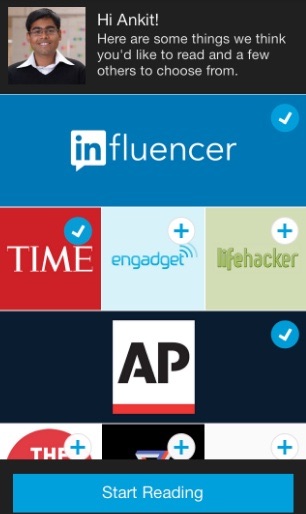
The cards on the interface allow users to skim through tons of content and publishers quickly.

If users want to read a story at a later time, the app allows them to save it. Users can easily dismiss stories that they don’t like, and they can follow authors with the click of a button.

Each of these actions refines future recommendations.

start reading on linkedin pulse

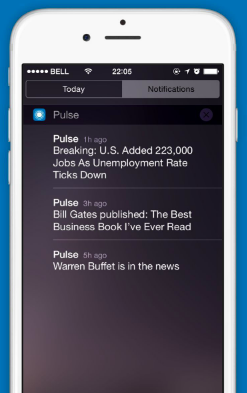
LinkedIn sends notifications from the app based on what’s trending in a user’s field, the authors that they follow, and their previous actions on the platform.

pulse ios notifications

If a connection or industry influencer appears in the news, LinkedIn will notify users about the piece of content that mentioned them.

With Pulse, you can target readers with relevant stories based on their connections and professional footprints.

All you have to do is publish on the platform to get started making waves with your audience.

How to publish on LinkedIn Pulse to connect with your audience

Before you publish any kind of content, you need a game plan. What’s the big picture?

Do you want to share insider advice, strengthen your brand, interest recruiters, earn your spot as a thought leader, expand your network, or all of the above?

Step 1: Choose a message and start writing.

Once you know why you’re writing, you can choose a message and focus on who you’ll be writing to. Pick a clear, straightforward message.

Do you want to write tips for freelancers? Or maybe you want to write about the best practices for hiring new employees in order to appeal to those in management.

If you’re having trouble choosing a message, think back to what you’ve benefited from in your career.

What advice would you give someone entering your field? Where is the industry headed? Is there anything big going on in the news that is going to impact your line of work?

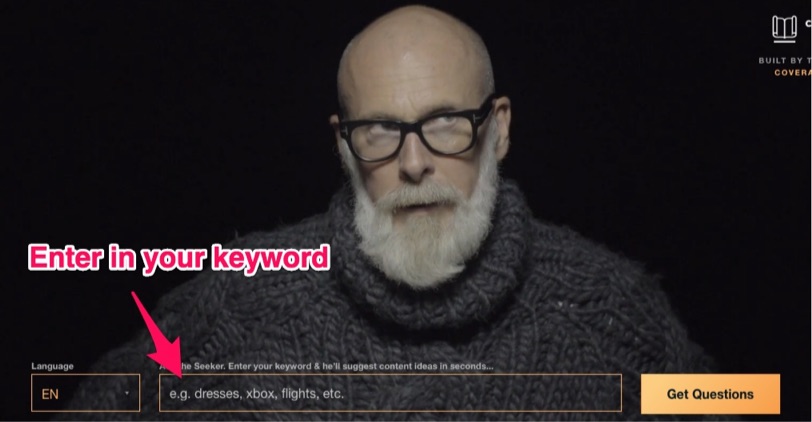
Once you have a topic or keyword, turn to Answer the Public to dwindle down potential angles.

answer the public enter keyword

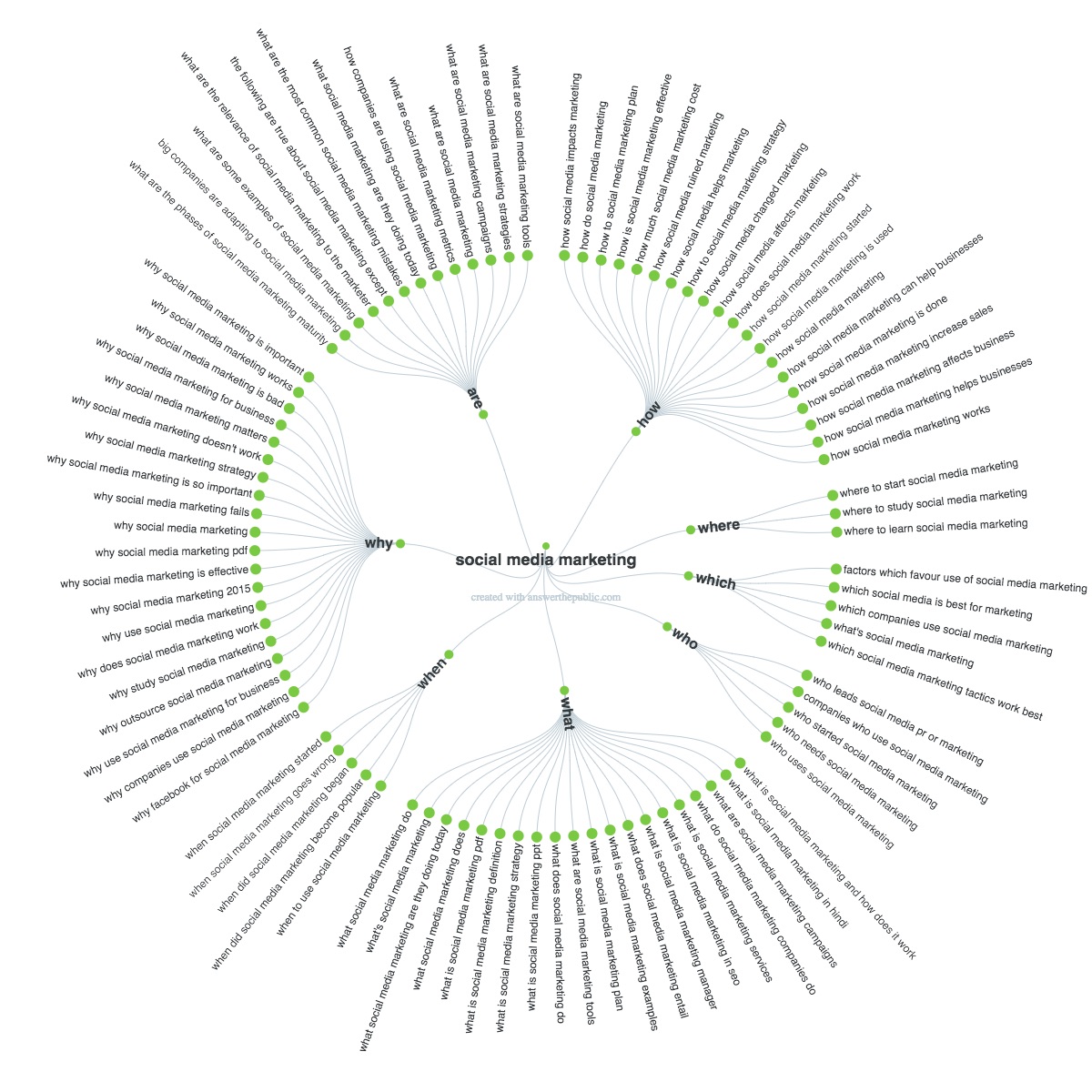
For example, say you want to write about social media marketing.

Just enter in the keyword, and the tool will recommend hundreds of ideas in the “why,” “are,” “how,” “where,” “which,” “who,” “what,” and “when” categories.

social media marketing questions

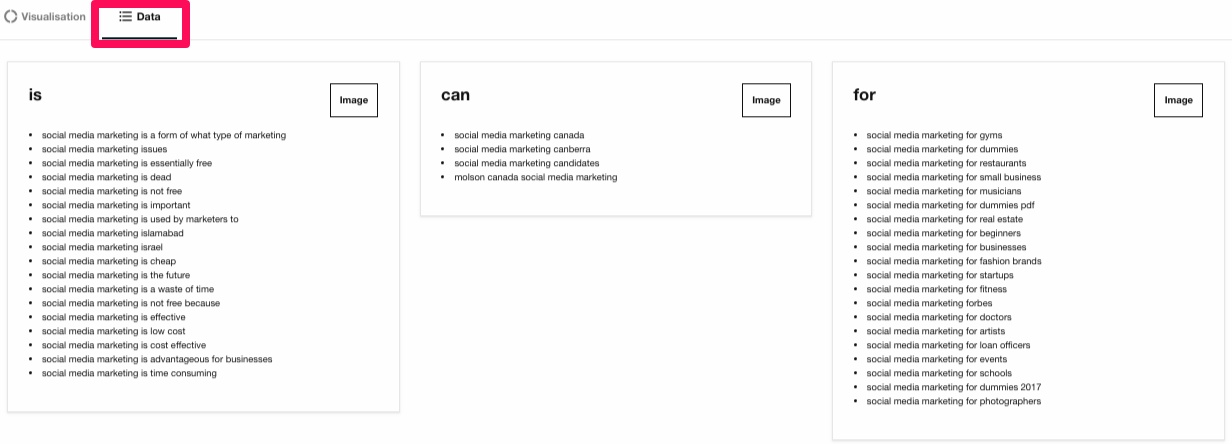
If you find it difficult to keep up with the visualization wheel, click the “Data” tab to see the content in organized boxes instead.

data tab answer the public

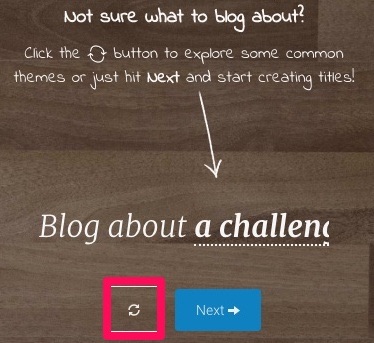
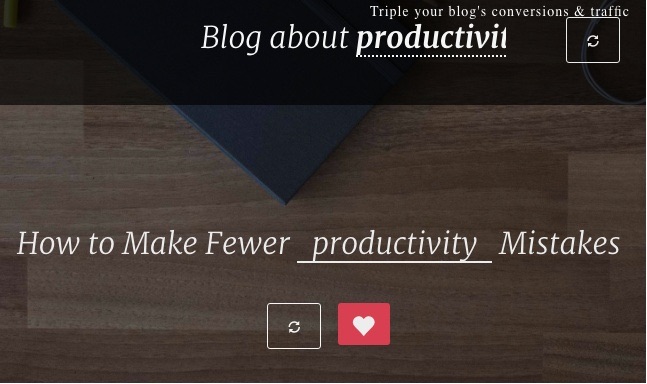
Another great tool for coming up with content ideas is the Blog Title Generator from BlogAbout. Just click the “Refresh” button until you find a theme you like.

content generation ideas for linkedin pulse

Hit “Next” when you’re ready to focus on creating the title for your new post.

Once you have your topic ready to go, you can begin writing. Once you’re done writing, you’ll need to add an image.

Step 2: Create and add an image.

All Pulse posts allow you to upload a header image. The best size to upload is 600 x 322 pixels (or double that size at 1200 x 644 pixels).

If your photo is larger, you can drag and reposition it to fit the header space more effectively.

linkedin pulse cover image

You can use free, high-resolution stock photos. Or, if you want to be more creative, you can create your own.

It’s easy to create custom blog graphics with Canva.

Just sign up for an account or log in if you already have one.

Then, click on the “Use custom dimensions” button. Canva doesn’t have a template for LinkedIn blog images yet, so you’ll need to manually enter your desired dimensions here.

create a design linkedin pulse

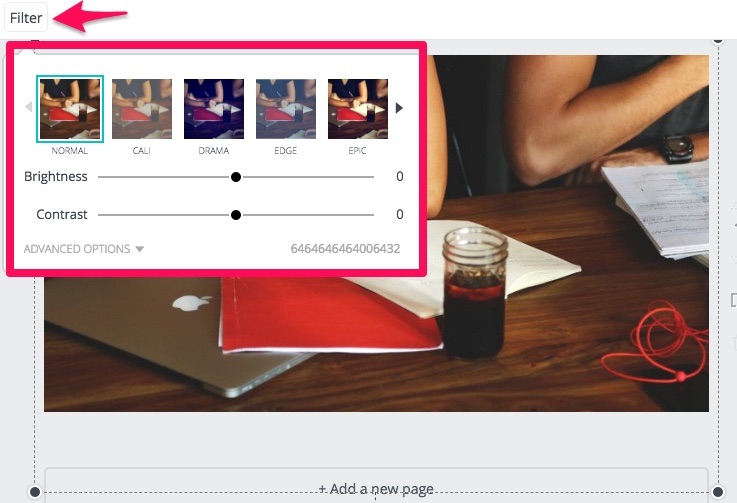
Next, use a free photo that Canva provides or upload your own image. Scale it to fit the space correctly and try out a few filters.

filter linkedin pulse image

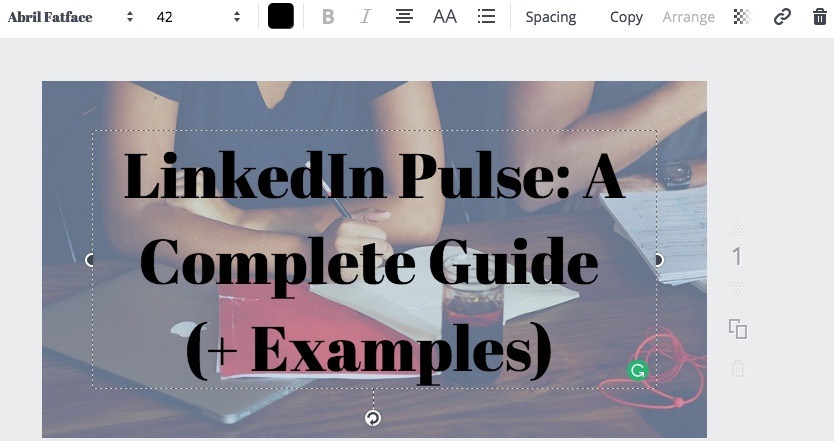
If you want, you can even add the text (such as the title of your post), enter in some graphics (like your logo), or add a few icons.

creating headline on linkedin pulse

Once you’re done, go ahead and download the image. From there, upload it to LinkedIn.

You’ll need an eye-catching headline to accompany your image.

Step 3: Write your headline.

Aside from your photo, your headline is one of the most vital aspects of a successful Pulse post.

This is what readers will look at to decide if they’re interested in what you have to say.

Write a concise, interesting headline that uses keywords that are relevant to your post.

Use numbers, facts, and statistics to create the impression of authority.

Use powerful word choice to pull readers in. Intrigue readers with words like “amazing” or “fascinating.” Create drama with words like “kill,” “fear,” or “death.”

Keep things short, sweet, simple, and to the point. If your headlines are too long, save some of the information for your introduction.

Now, you’re ready to finalize your post.

Step 4: Finalize the post.

You have your image, headline, and content where you want them. Next, you should finalize your article.

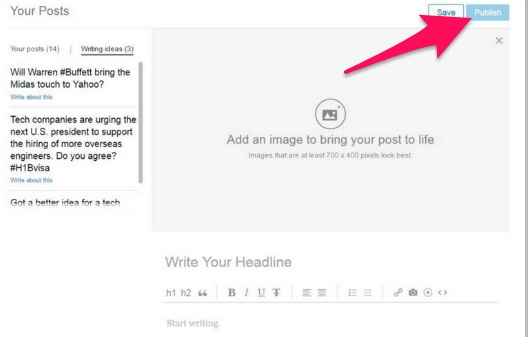
The “Publish” button is in the upper right-hand corner of your screen. Before you press it, make sure that you’ve formatted your post correctly.

publish button on linkedin pulse

Add in block quotes, bullet points, images, or videos and correct any header mistakes.

If you choose to include links, double-check that they send readers to the right places.

Check spelling and grammar. Typos and bad punctuation can ruin an article’s success in the blink of an eye.

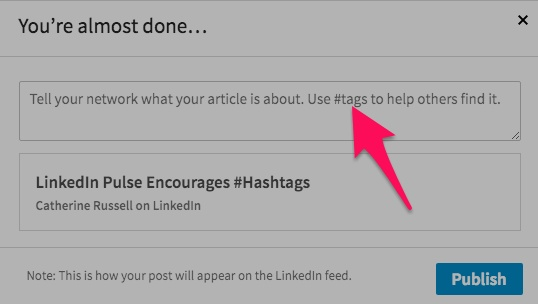
At the end of your post, you can add up to three tags to help users discover your content. These tags will influence the channels that your article may appear on.

It’s best to add all three tags to take full advantage of this feature.

add tags on pulse

Once you’ve double-checked your content and added the appropriate tags, you’re ready to officially publish it.

Step 5: Publish your post.

LinkedIn doesn’t yet allow you to schedule Pulse posts for future publication.

If you don’t want to publish your article just yet, set yourself a reminder to log into LinkedIn and publish it when you want it to go live.

Once you do hit publish, the post will become part of your profile and will appear in your “Posts” section.

Your followers and connections will receive a notification about your newly-added content.

It will show up in their notifications, within their feed, and via email if they’ve subscribed to daily emails from Pulse.

Any members who aren’t following you but fit within your industry or share similar connections may also receive an update about your post, which could convert them into a follower.

Your post will be searchable both on LinkedIn and off of it.

Create a content calendar so that you will have a clear schedule for future LinkedIn Pulse articles.

Don’t forget to create a content calendar

A content calendar will save you time in the long run. It will help you schedule out your content and keep it organized.

If you spend time brainstorming content topic ideas now, you won’t have to do it when you’re ready to sit down and write.

With a reliable stream of content, your readers will stay engaged.

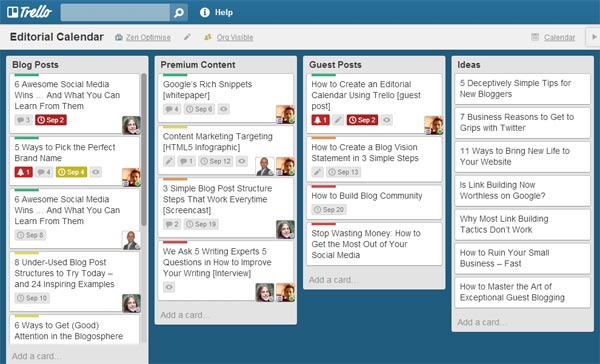
Try out a tool like Trello for creating your very own LinkedIn Pulse content calendar.

pulse editorial calendar on trello

You could even create a theme-based weekly post or round up that is exclusive to your Pulse readers like NPR’s Weekly Roundup:

npr weekly roundup

Plan your calendar out for one to six months.

Schedule as far out as possible so that there’s no question about what you should be working on, when you should work on it, and when it should go live on Pulse.

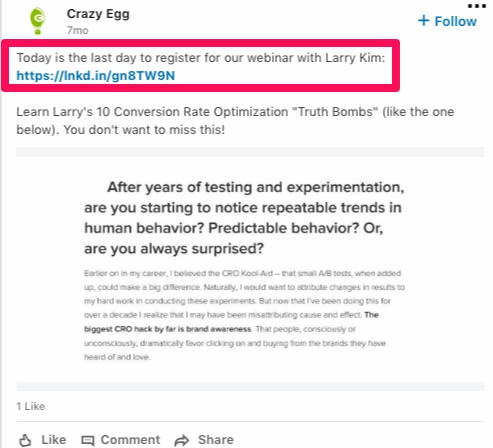
You should also plan to announce large events on LinkedIn like webinars, Q&As, interviews, product releases, conferences, and more as soon as you’ve committed to a date.

crazy egg post share on linkedin

Add these announcements to your content calendar, too.

You should also test content before adding it to your Pulse calendar. Does it match your other content marketing efforts? Would you share it yourself?

You don’t have to set your calendar in stone, either. Keep an eye on your surroundings and competition. If something is trending, take advantage of it.

What topics are your competitors talking about? How do your reader analytics look? If a topic just isn’t working, don’t be afraid to pull it.

How to boost your results on LinkedIn

There are a few things that you can do to elevate your posts on LinkedIn for the best results possible.

For example, you should use keywords on Pulse posts just like you would on regular blog posts.

Review profiles of others within your industry. What keywords are they using?

Make a list of industry-related keywords and include them with each piece on your content calendar.

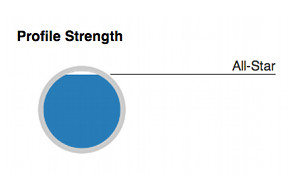
Next, make sure that you’ve completely filled out your profile. As you fill out more content on your profile, the “Profile Completeness” or “Profile Strength” circle will fill in.

Try to get that circle to be 100% blue since complete profiles usually rank higher on searches.

linkedin profile strength

To complete your profile, head to the “Profile” navigation bar on your account.

Click “Edit Profile” and fill out every section.

Be sure that you have a profile photo on your account. Update it regularly to match the photos you’re using on other sites. That way, people will immediately recognize you and your company.

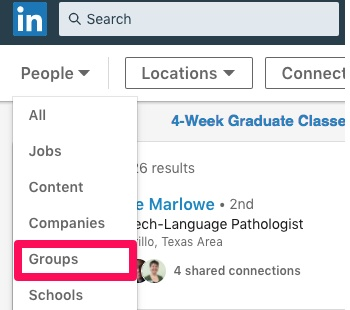
You should also join LinkedIn groups related to your industry. Click on “Groups” in the navigation bar of your LinkedIn homepage.

groups selection on linkedin

Then, search through groups that LinkedIn recommends for you.

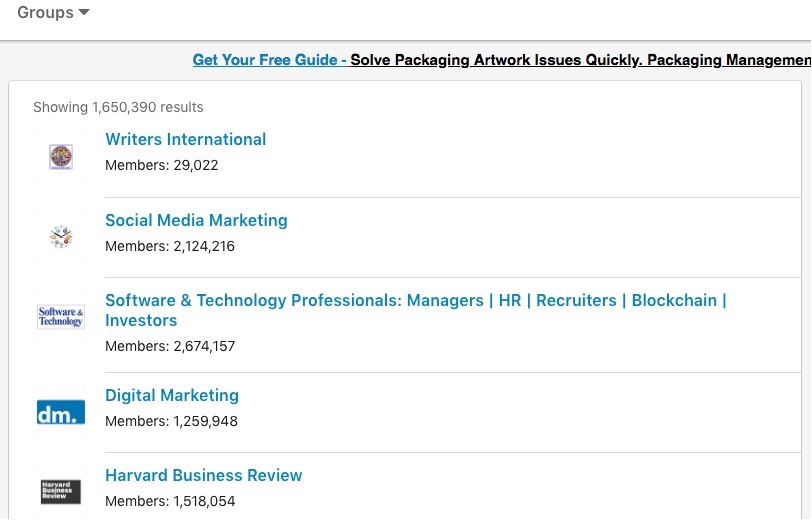
group listing on linkedin

Join a few you like and share your content there. Engage with other members’ posts, too.

You’ll also want to keep in mind that profiles with regular updates have increased visibility. You can stay active by simply updating your LinkedIn status frequently.

This doesn’t have to be difficult. When you have news about your business, make a point to share it with your audience.

Now that you understand what LinkedIn Pulse is and how it works, you might be wondering if you should treat it the same way you treat your blog. The short answer is no.

LinkedIn Pulse vs. your website blog

When you publish an article on your blog, you publish it on your terms.

On LinkedIn, you’re publishing on LinkedIn’s platform and LinkedIn’s terms instead of your own.

LinkedIn chooses how to show and share your articles. If you want Pulse to recommend your posts, you have to play by LinkedIn’s rules.

linkedin pulse shared articles

On your own blog, you can set up automatic sharing to social media, schedule out posts, and run your site the way you want to.

That isn’t the case on LinkedIn.

When you publish on your own website, you gain SEO benefits and an increase in traffic for posting articles.

When publishing on LinkedIn, you have to remember to link back to your site for the same results.

You might be thinking that you can just publish the same article on your website and LinkedIn to “double dip” and get the best of both worlds.

But that could actually cause more harm than good.

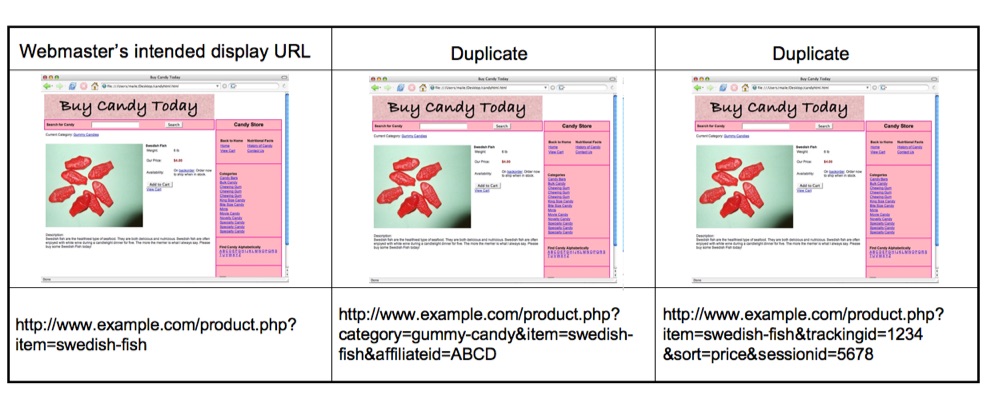
When your content appears twice on the web, it creates duplicate content. Google doesn’t like duplicate content, and it will penalize websites where the content shows up last.

duplicate content

If Google can’t figure out who posted the content first, it will penalize both websites. That means no ranking, which is not good.

If you still want to publish on both platforms, there are two ways that you can do it:

  • Rewrite articles and publish two different versions.
  • Publish the full version to your website and write a teaser post on LinkedIn that directs users to your site to read the rest of the article.

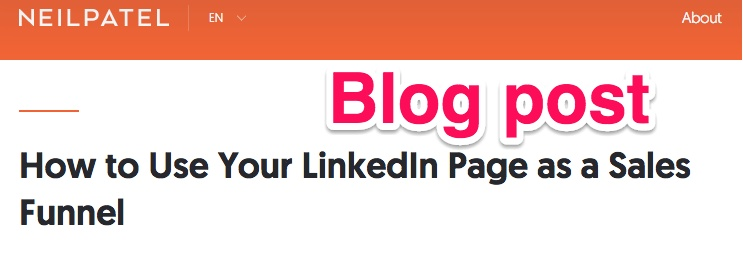
For example, take this Neil Patel blog post about LinkedIn sales funnels.

neil patel blog post about linkedin

The LinkedIn post of the same article features a “Click to continue reading” button that directs users to the rest of the post on the website.

neil patel linkedin pulse post

There are many ways to leverage the power of your LinkedIn network.

You can still use LinkedIn Pulse while also optimizing your site with blog posts. You don’t have to choose one or the other.

Conclusion

Sometimes, the reach you already have on your website just isn’t cutting it. That’s why you should diversify your content to get as much engagement as possible.

By being active on several different platforms, you can gain more views, followers, readers, and customers.

But most businesses and influencers don’t know that they can post full articles on LinkedIn with LinkedIn Pulse. It’s LinkedIn’s news aggregation platform.

By using LinkedIn Pulse, you can connect with your target audience, engage customers by writing useful content, and establish yourself as an industry thought leader.

Pulse works by notifying users of recommended content based on their connections, industries, and interests. Users can follow brands, influencers, topics, and more.

To publish on Pulse, choose a message and start writing. Create and add a header image that is 600 x 322 pixels. You can use a stock image or create your own on Canva.

Then, write out an engaging headline. Keep it short, simple, and intriguing. Use numbers, statistics, and facts.

Finalize your post. Double-check that you don’t have any grammar or punctuation mistakes within your article. Fix formatting errors and add tags to your post.

Then, publish your post to send it out to followers, connections, and others within your industry.

Like most places, consistency is key on Pulse.

Don’t forget to create a LinkedIn Pulse content calendar to plan and organize content one to six months in advance. Use a tool like Trello to brainstorm and keep track of ideas and due dates.

Boost your results by completing your profile, joining groups, interacting with other users, posting status updates, and targeting keywords with your posts.

Never post the same content on Pulse as you post on your blog. If you do, Google might penalize your website.

To avoid a penalty, you can either write two different versions of your post or only share a snippet of your full article on Pulse with a link to your website where users can continue reading.

Take advantage of LinkedIn Pulse today to boost your brand awareness and engagement online.

How have you taken advantage of LinkedIn Pulse within your industry?

About the Author: Neil Patel is the cofounder of Neil Patel Digital.

Reverse Phone - People Search - Email Search - Public Records - Criminal Records. Best Data, Conversions, And Customer Suppor